
3 min read ·
How to Take Off Second Skin: Go Low, Slow and Warm
Remove tattoo second skin under warm running water, pulling it low and back over itself—not upward. Then wash gently and check for irritation.
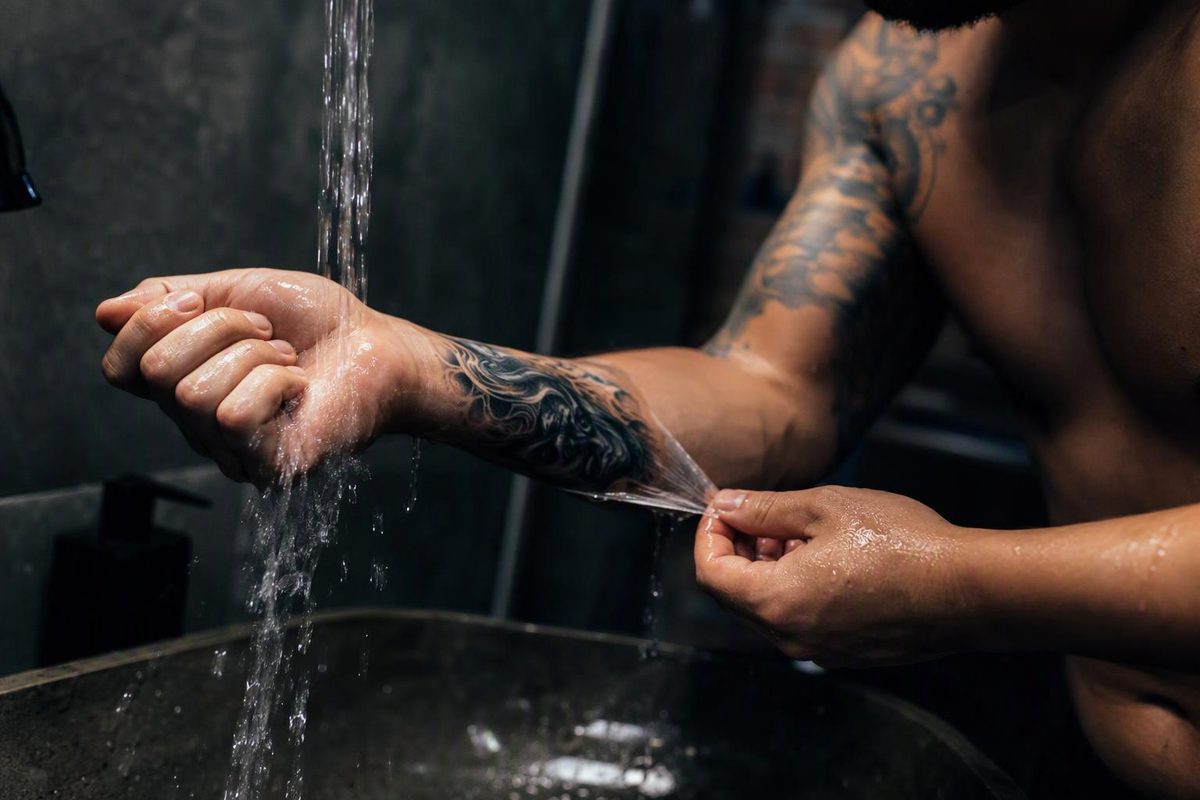
Remove tattoo second skin slowly, keeping the film low and pulling it back over itself. Do not rip it upward like a wax strip. If it hurts or strongly tugs the skin, pause rather than forcing it.
“Second skin” can mean several adhesive film dressings, and removal instructions differ. Derm Shield says to peel its film back over itself, while 3M gives Tegaderm users both a low-and-slow peel method and a stretch-release method. Check the product name and any instructions from your artist before starting (Derm Shield instructions; 3M Tegaderm removal guide).
How to remove the film
- Wash your hands. Have a mild fragrance-free cleanser and clean paper towel ready.
- Use warm running water if the product permits it. Saniderm recommends removing its film in the shower under warm water. Keep the water comfortable, not painfully hot (Saniderm tattoo-care instructions).
- Loosen one edge. Lift a corner without scratching or digging at the tattoo.
- Pull low and slow. Fold the loosened film back over itself and keep it close to the skin. Support the newly exposed skin with your free hand instead of pulling the dressing upward.
- Follow the brand’s release method. Tegaderm’s low-peel instructions specify working in the direction of hair growth. Its alternative stretch method involves pulling the film straight out, parallel to the skin, then alternating between stretching and relaxing it. Do not assume every brand should be stretched.
- Pause if it feels stuck. Let more warm water run over the edge if your product allows wet removal, then continue slowly.
Do not scrub the film loose with a washcloth. General wound-care guidance also advises gentle dressing removal and says an adhesive dressing can be soaked with warm shower water to reduce trauma (University Hospitals Sussex). If adhesive remains, do not pick at the healing tattoo. Ask the manufacturer or your artist which remover, if any, is suitable for that specific film around fresh tattooed skin.
What to do afterward
Gently wash away surface fluid and residue with lukewarm running water and a mild fragrance-free cleanser. Use clean fingertips rather than a sponge or cloth. Rinse, then pat dry with a clean paper towel or let the area air-dry. For help choosing a cleanser, see whether antibacterial soap is necessary.
Follow the product and artist-specific plan for either applying a fresh sheet or moving to open healing. Never put the used film back on. If you are moving to open healing and the tattoo feels dry, apply only a thin layer of an appropriate fragrance-free moisturizer; aftercare lotion should fit the healing stage.
Second skin is not the same as ordinary household wrap, which follows a shorter schedule. See how long to keep cling film on a tattoo if that is what you have.
When to remove it early
Do not keep compromised film on merely to reach a target number of days. Remove it if water gets underneath, fluid leaks out, the tattoo becomes exposed through a lifted edge or the dressing develops a hole. Saniderm says that if water gets under its bandage, it should be removed promptly; the tattoo should then be cleaned before using a replacement dressing or continuing with open healing. Tegaderm’s directions also call for changing a dressing that leaks, develops holes or no longer adheres.
Remove the film if you develop irritation or a suspected adhesive reaction. Derm Shield warns that its adhesive can cause reactions and says to discontinue use if irritation occurs. Its directions advise medical care for a severe reaction; Tegaderm advises contacting a healthcare professional for itching, burning or a rash.
Some early soreness, redness and fluid can occur with a new tattoo. Seek medical care if redness spreads or darkens, pain is severe or worsening, drainage becomes thick, yellow or foul-smelling, or you develop fever or chills (GoodRx’s clinician-reviewed infection guidance).