
3 min read ·
Antibacterial Soap Is Optional for Most New Tattoos
Choose a mild, fragrance-free soap for tattoo aftercare. Antibacterial soap is not clearly better, and harsh formulas may irritate healing skin.
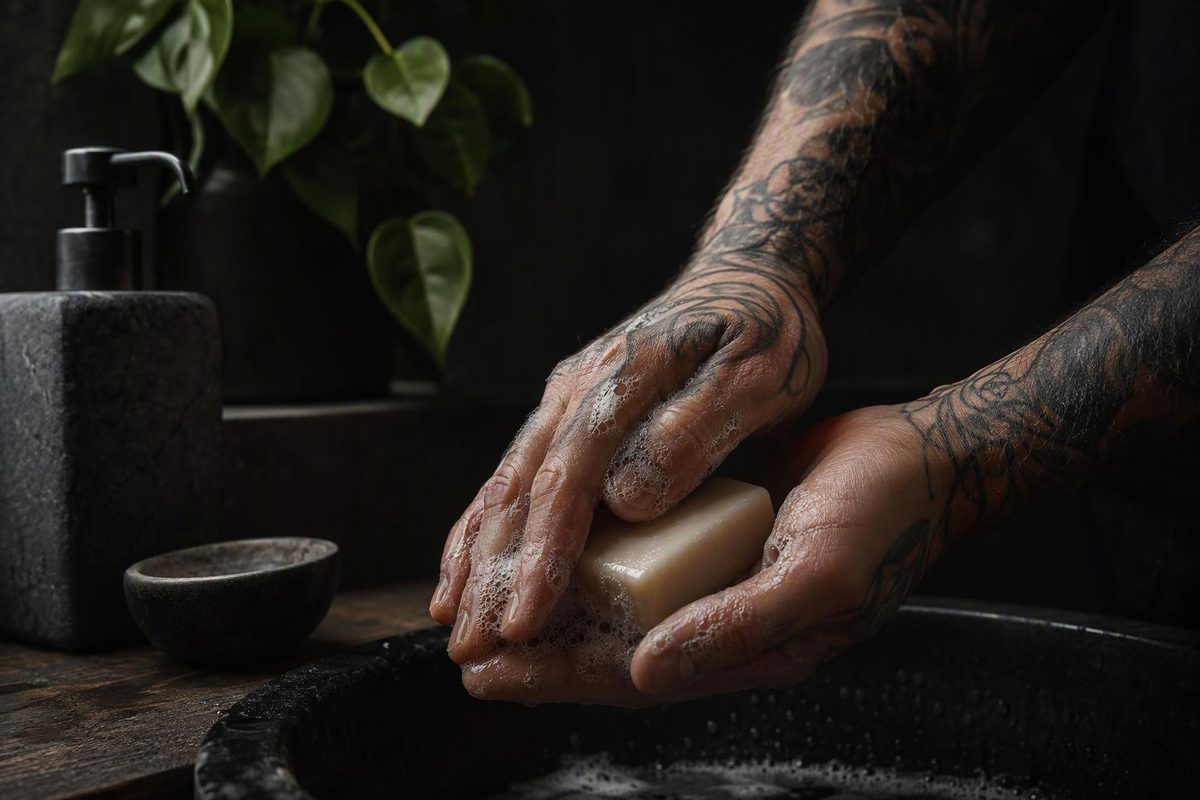
You do not necessarily need antibacterial soap for a new tattoo. The practical priority is a mild, fragrance-free soap used gently, followed by thorough rinsing and careful drying.
Aftercare guidance is not completely consistent. Cleveland Clinic recommends a mild, fragrance-free antibacterial soap, while Mayo Clinic advises washing with soap and water and does not require an antibacterial product. For another type of small skin wound—a skin-biopsy site—the American Academy of Dermatology specifically recommends mild, fragrance-free soap rather than antibacterial soap. Together, these sources do not establish that an antibacterial label is essential for routine tattoo aftercare (Cleveland Clinic, Mayo Clinic, American Academy of Dermatology).
What to look for in a tattoo soap
Choose a rinse-off cleanser that is:
- Fragrance-free. Added perfume does not help clean the tattoo and may complicate matters if your skin becomes irritated.
- Mild and easy to rinse away. It does not need tattoo-specific branding.
- Free of exfoliating particles or acids. Avoid scrubs, textured cleansers and products marketed for resurfacing skin.
- Preferably free of dyes. Color adds no cleaning benefit.
If your artist recommends an antibacterial cleanser and it does not irritate your skin, it can be a reasonable option. In the United States, the label generally says “antibacterial,” and a Drug Facts panel indicates that the wash contains an antibacterial active ingredient. Currently marketed consumer antiseptic washes may use benzalkonium chloride, benzethonium chloride or chloroxylenol.
Do not assume stronger is better. The FDA says there is insufficient evidence that over-the-counter antibacterial soap prevents illness better than plain soap and water. That finding concerns consumer washing generally, not tattoo-specific trials, but it is a good reason not to treat antibacterial soap as mandatory (FDA).
How to wash a new tattoo
Follow your artist’s instructions for the covering they applied. Do not remove an intact adhesive film just to wash beneath it; ordinary cling film, gauze and adhesive “second skin” have different removal schedules. Our guide to showering with each covering type explains the distinction.
Once the tattoo is uncovered and ready to be washed:
- Wash your hands.
- Wet the tattoo with lukewarm water.
- Lather a small amount of soap in clean hands and gently pass your fingertips over the skin.
- Do not scrub or use a washcloth, sponge or exfoliating tool.
- Rinse away all the soap.
- Pat dry with a clean disposable paper towel, or let the area air-dry briefly. Do not rub.
- Apply only the thin layer of moisturizer or aftercare product advised for your healing stage.
Both Mayo Clinic and Cleveland Clinic advise washing twice a day. Washing after obvious contamination may also be sensible, but repeated washing “just in case” can leave skin dry and irritated. Once active weeping has stopped and peeling begins, a lightweight fragrance-free lotion used sparingly may help with dryness.
Antibacterial soap is not antibiotic ointment
These products are easy to confuse:
- Antibacterial soap is a rinse-off cleanser.
- Antibiotic ointment is a leave-on medicine containing an antibiotic such as neomycin, bacitracin or polymyxin B.
Do not routinely apply antibiotic ointment unless a healthcare professional has told you to use it. Topical antibiotics are a common cause of allergic contact dermatitis, and neomycin and bacitracin are prominent allergens in North American patch-test data. A reaction may cause an itchy, sharply defined rash with redness, swelling, blisters, crusting or weeping, which can be mistaken for infection (peer-reviewed clinical review).
Stop using a cleanser if the skin reacts
Rinse the product off and stop using it if a new rash, intense burning, blisters or sharply outlined itch develops after washing. Switch to a simple fragrance-free cleanser. Contact a clinician if the reaction is substantial or does not settle.
Seek prompt medical care rather than trying stronger soap if redness is expanding, pain or swelling is worsening, the tattoo feels increasingly hot, drainage is significant or foul-smelling, red streaks appear, or you develop a fever. These are warning signs identified by Cleveland Clinic. Soap can clean the surface; it cannot treat an established skin infection.