
3 min read ·
Aftercare for a Tattoo: What to Do From the First Dressing to Healing
A practical tattoo aftercare routine: dressing instructions, gentle washing, light moisturizing, skin protection and signs that need medical attention.
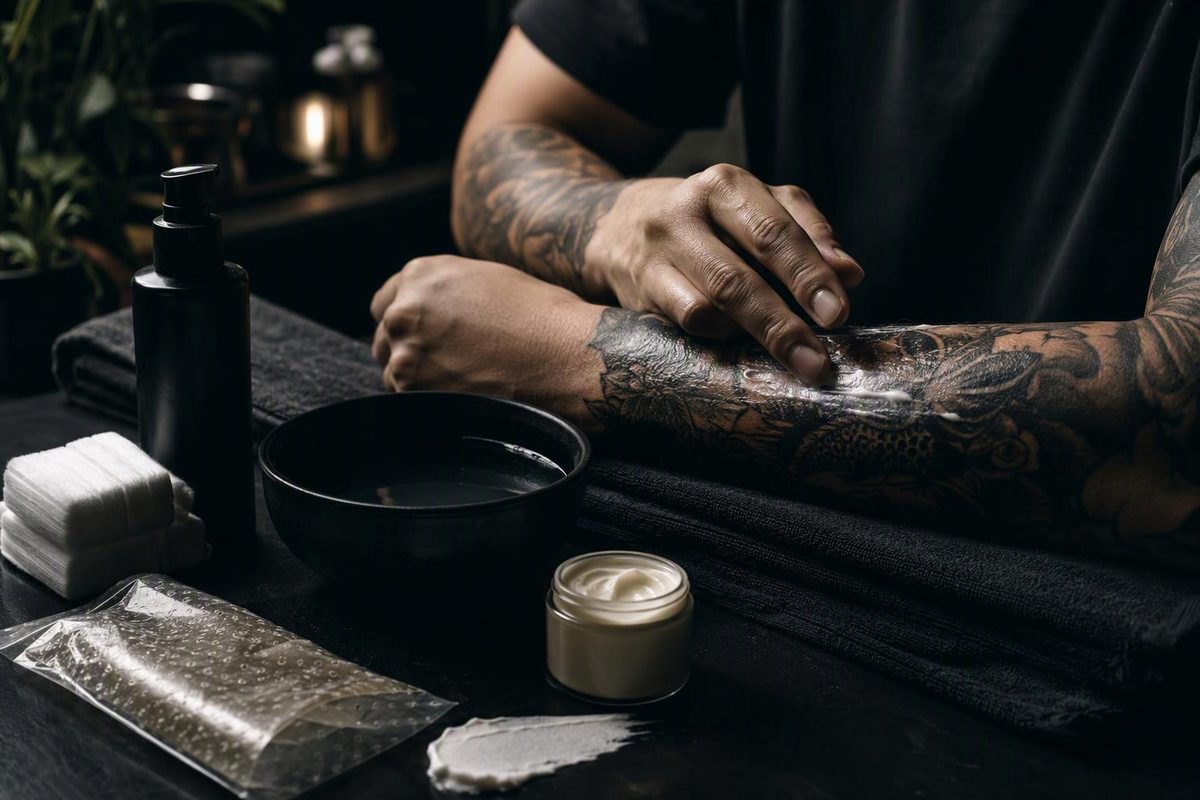
Aftercare for a tattoo starts with the dressing your artist applies. Once that covering comes off, the basics are gentle washing, a small amount of moisturizer, and protection from rubbing, soaking and sunlight. Keep your artist’s written instructions handy, especially for the type of dressing used.
Start with the right dressing instructions
There is no single removal time for every tattoo covering. Ordinary plastic wrap or gauze usually comes off within a few hours; medical adhesive film, often called “second skin,” may stay on for several days. Follow the instructions for your specific dressing rather than borrowing another person’s schedule. Wash your hands before removing it. Healthline’s aftercare guide explains these differences.
If you are unsure what the covering is or when to remove it, contact your artist before changing it. For adhesive-film removal, see our guide to taking off second skin gently.
Once the dressing is off: wash, dry, moisturize
Use this routine while the uncovered skin is healing:
- Wash your hands first. Do this before cleaning the tattoo or applying a product.
- Wash gently once or twice a day. Use lukewarm water and a mild, fragrance-free soap. Rinse well. Do not scrub the tattoo or use an exfoliating tool.
- Pat dry. Use a clean paper towel rather than rubbing. Let the skin finish drying before applying moisturizer.
- Apply a small amount of moisturizer. Choose a simple, fragrance-free lotion or the ointment recommended in your aftercare instructions. Spread it lightly rather than leaving a thick coating.
Healthline recommends washing once or twice daily and using a small amount of fragrance-free moisturizer; Cleveland Clinic similarly advises gentle washing, patting dry and regular moisturizing.
You do not need to build a complicated product routine. If you are choosing a lotion, our guide to matching tattoo lotion to the healing stage covers what to look for.
Protect the tattoo between washes
- Wear loose, breathable clothing. Avoid waistbands, cuffs or other tight fabric rubbing directly over the tattoo.
- Do not pick or scratch. Let scabs and flakes detach on their own, even when the skin feels itchy.
- Avoid soaking until it is fully healed. That includes baths, hot tubs, pools and open-water swimming. Gentle washing is different from prolonged immersion.
- Keep healing skin out of direct sunlight. Use shade and loose, protective clothing. Do not apply sunscreen to the fresh tattoo before it has healed.
These precautions follow Cleveland Clinic’s tattoo aftercare guidance. Once the skin has healed, use broad-spectrum, water-resistant sunscreen with SPF 30 or higher on exposed tattooed skin, as recommended by the American Academy of Dermatology.
Watch the trend, not just the day number
Some early soreness, redness, swelling and clear fluid can be normal. Itching, flaking and light scabbing can follow. The useful distinction is whether discomfort and redness are settling rather than intensifying. Healing varies with tattoo size and location, and deeper skin can take months to recover even after the surface looks healed. AAD describes normal early changes; Cleveland Clinic explains the variable healing timeline.
Seek medical care the same day—do not wait for your next artist appointment—if you notice:
- Redness that spreads or becomes darker instead of fading.
- Pain that increases rather than easing.
- Increasing heat, pus or foul-smelling drainage.
- Fever, chills or red streaks extending from the tattoo.
AAD advises seeing a doctor right away for infection signs; Cleveland Clinic also identifies heat, odor, worsening pain and streaking as warning signs.
Trouble breathing, chest tightness or dizziness with a tattoo reaction needs immediate medical care, according to AAD’s guidance on serious reactions.
For a closer comparison, see normal healing versus signs of tattoo infection. This routine is general guidance, not a diagnosis or a substitute for medical treatment.