
3 min read ·
Choose a Lightweight Fragrance-Free Lotion for a Healing Tattoo
How to choose a fragrance-free tattoo lotion, compare three common options, apply it sparingly and respond to irritation or infection signs.
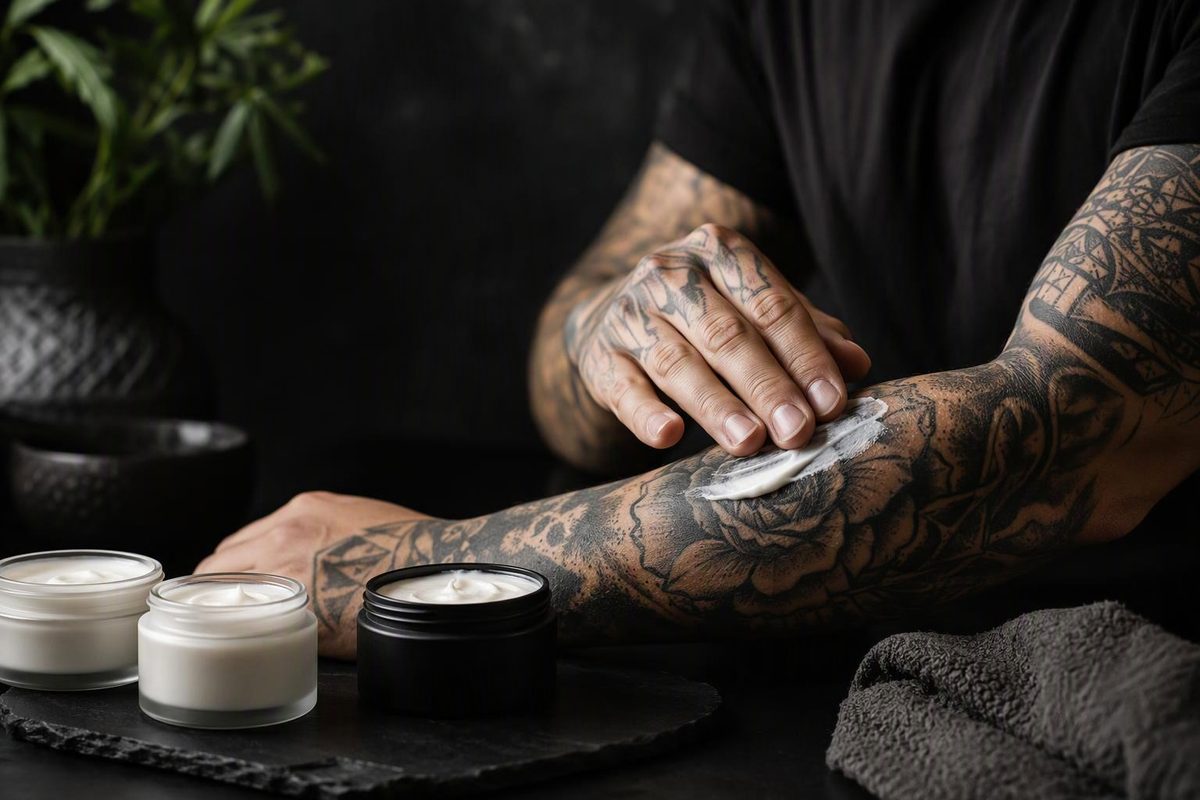
For a healing tattoo, look for a plain, lightweight, fragrance-free lotion. The useful criteria are the formula and texture—not whether the bottle is marketed specifically for tattoos.
Use lotion only when your artist’s aftercare plan or the instructions for your dressing call for it. If an adhesive “second skin” is intact, do not lift an edge just to add lotion. Follow that product’s instructions until the film is removed; dressing methods differ. If you need help with removal, see How to Take Off Second Skin Without Pulling Your Tattoo.
Choose fragrance-free, not merely unscented
“Unscented” does not necessarily mean free of fragrance ingredients. The FDA says manufacturers may add fragrance to mask the smell of other ingredients without giving a product a noticeable scent. Some fragrance ingredients can cause allergic reactions or sensitivities, so check for a fragrance-free claim and read the ingredient list rather than relying on smell alone (FDA).
Avoid a lotion if its label lists fragrance, parfum or essential oils used for scent. “Natural” does not automatically mean gentler: fragrances can come from natural extracts or be synthesized, and both types include known contact allergens (DermNet).
A quick lotion checklist
A practical option should be:
- Fragrance-free, not just unscented
- Dye-free
- A lightweight lotion or cream that spreads easily
- Free of exfoliating acids, retinoids, acne treatments, self-tanner, glitter, and warming or cooling ingredients
- Comfortable after a thin application, without ongoing burning or increasing redness
The American Academy of Dermatology advises using a water-based lotion or cream when tattooed skin feels dry (AAD). A long ingredient list is not automatically unsuitable, but a product you already tolerate is easier to assess than an unfamiliar, elaborate formula.
For more detail on choosing a texture for the current healing stage, see A Good Tattoo Aftercare Lotion Fits the Healing Stage.
Three ordinary lotions that pass the basic label check
These are label-based examples, not a ranking, and none is guaranteed to suit every person:
- CeraVe Daily Moisturizing Lotion: The manufacturer describes it as lightweight, non-greasy and free of added fragrance; water is first on the published ingredient list (CeraVe).
- Lubriderm Daily Moisture Lotion Fragrance-Free: The manufacturer describes this version as lightweight and free of fragrance and dyes (Lubriderm). Check the full name so you do not accidentally buy the similarly branded scented lotion.
- Vanicream Moisturizing Lotion: Vanicream says this lighter lotion contains neither fragrance nor masking fragrance and has no botanical extracts or essential oils (Vanicream).
Formulas and regional versions can change. Check the exact bottle in your hand, particularly when buying travel-size packaging or ordering from an older product listing.
How to apply lotion without overdoing it
Once your dressing instructions permit moisturizing:
- Wash your hands.
- If the tattoo is uncovered, wash and dry it as your artist directed.
- Place a small dab of lotion on the skin.
- Spread it gently into a very thin, even layer. Do not scrub or pull at flakes.
- Reapply only when the skin feels dry or tight, following any schedule your artist provided.
The skin should feel comfortable, not wet, slippery or heavily coated. More lotion does not mean faster healing. If a visible coating remains, use less at the next application. Let peeling skin and light scabs come away on their own.
Stop if the product appears to cause a reaction
Stop using a lotion if a new burning sensation, itchy rash, blisters or marked swelling begins after application. Do not repeatedly test the suspected product on the healing tattoo. A published case report describes allergic or irritant contact dermatitis after scented lotion was applied to a healing tattoo, although one case cannot show how often this happens (case report). Ask a clinician about a reaction that is persistent, spreading or worsening.
Some limited redness, soreness, itching and flaking can occur during ordinary healing. Seek prompt medical care if redness becomes darker or spreads, pain worsens instead of easing, pus appears, or you develop fever or chills; the AAD lists these as possible signs of infection (AAD).
Trouble breathing, chest tightness, dizziness, widespread hives or intense swelling can signal a serious allergic reaction and requires immediate medical care.