
4 min read ·
Build a Simple Tattoo Aftercare Kit Without Buying Every Extra
Choose tattoo aftercare products by purpose: cleanser, moisturizer, dressing supplies and sunscreen for later. Learn which kit extras you can skip.
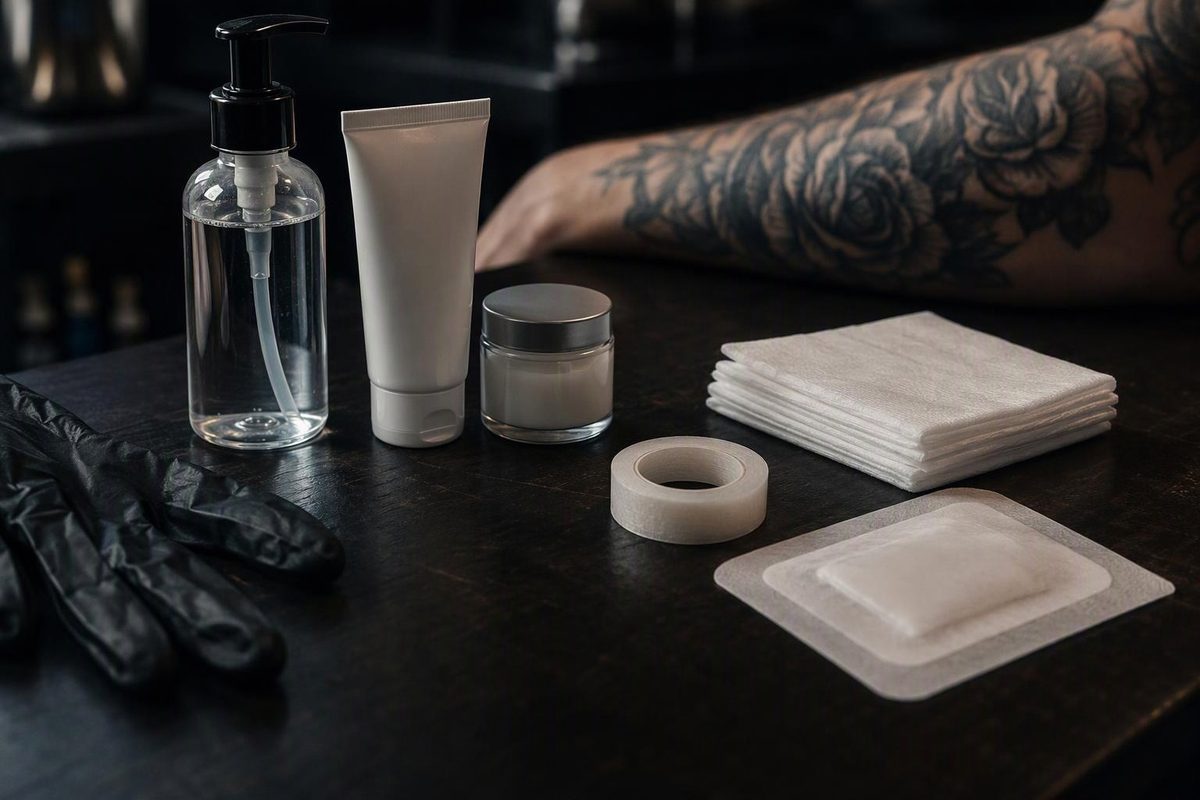
Start with one gentle, fragrance-free cleanser and one simple moisturizer that fits your artist’s instructions. Add dressing supplies only if your aftercare plan requires them, and save sunscreen for healed skin. A boxed tattoo kit can be convenient, but evaluate its contents rather than treating every included product as necessary.
Before shopping, ask your artist what covering they will use, whether you need replacement dressings, and which moisturizer or ointment they recommend. This avoids buying products for a different aftercare method. Cleveland Clinic’s tattoo guidance recommends following the artist’s covering instructions, gentle washing, and a simple moisturizer or recommended ointment.
Your shopping list, by purpose
| Product | What to look for | Buying decision |
|---|---|---|
| Cleanser | Mild, fragrance-free formula without perfumes or dyes; no scrub particles | Buy one if you do not already have a suitable product. |
| Moisturizer | Simple, fragrance-free lotion or cream; an ointment only if it is part of your care plan | Start with one, rather than buying lotion, butter and balm together. |
| Dressing supplies | The exact type your artist specifies, with clear application and removal directions | Check what the studio provides before buying replacements. |
| Clean paper towels | A clean supply for gently patting the area dry | Include these practical supplies in your budget. |
| Sunscreen | Broad-spectrum, water-resistant SPF 30 or higher | Buy for use after the tattoo has healed, not for application to a fresh tattoo. |
The cleanser, moisturizing and drying criteria follow Cleveland Clinic’s aftercare advice. The sunscreen specifications come from the American Academy of Dermatology (AAD); Cleveland Clinic advises avoiding sunscreen on the tattoo until it is fully healed. Use shade and suitable clothing for protection while it heals.
Cleanser: choose the formula, not the strongest claim
Prioritize mildness and the absence of fragrance. Cleveland Clinic recommends a mild, fragrance-free antibacterial soap, while AAD’s general wound-care guidance recommends mild soap and water. Those recommendations do not establish that an antibacterial label makes a cleanser better than another gentle option for tattoo healing. See our guide to whether antibacterial soap is necessary if your artist’s advice leaves you unsure.
Look for “fragrance-free,” not just “unscented.” In its skin-care guidance for people with diabetes, the AAD explains that unscented products can contain fragrance masked so you cannot smell it.
Moisturizer: avoid buying overlapping products
“Balm,” “butter” and “lotion” names are not enough to choose between products. Check the ingredients, directions and your care plan. A simple moisturizer is a reasonable starting point; a richer ointment should not automatically become an extra layer on top.
Petroleum-based products are an area where advice differs. AAD’s general wound-care guidance recommends petroleum jelly for minor injuries, but Cleveland Clinic’s tattoo-specific guidance advises avoiding it during tattoo healing. If your artist recommends Aquaphor or another ointment, clarify the intended amount and duration rather than buying several alternatives and alternating between them. Our Aquaphor guide covers that decision separately.
Dressings: buy for the method you will actually use
Adhesive “second skin” and ordinary plastic wrap are not interchangeable purchases. Ask for the dressing’s name and written instructions before ordering a roll or replacement sheets. Mention any previous reactions to medical adhesives.
For example, Saniderm’s own directions specify cleaning and drying before application, replacement steps, and removal if water gets underneath. Its instructions also say not to submerge a new tattoo even when bandaged. A waterproof label is not permission to swim, and one brand’s wear schedule should not be applied to every dressing.
Is a tattoo aftercare kit worth buying?
Compare a kit with the small list above:
- Check every ingredient list. A tattoo-specific name does not replace checking for fragrance or ingredients you already know cause you problems.
- Count distinct jobs, not bottles. Two moisturizers may fill the same role; sunscreen belongs to later care.
- Compare usable quantities and total cost. A lower price per ounce is less useful if it means buying a large amount you will not use.
- Check directions and expiry information. Skip a product whose intended use or instructions are unclear.
Leave exfoliating products out of the healing kit; Cleveland Clinic advises avoiding exfoliation until the tattoo is healed. Do not add antibiotic ointment as a routine “just in case” purchase unless a clinician recommends it. AAD’s general wound-care advice says antibacterial ointments are unnecessary for wounds cleaned daily.
If redness spreads, pain worsens, pus appears, or you develop fever, seek medical care right away rather than trying another aftercare product. These are AAD warning signs of possible tattoo infection.