
17 min read ·
What to Expect When Your New Tattoo Starts Flaking
Visible flaking often settles within 4-14 days. Ordinary flakes come from surface skin and do not automatically mean the tattoo is disappearing.
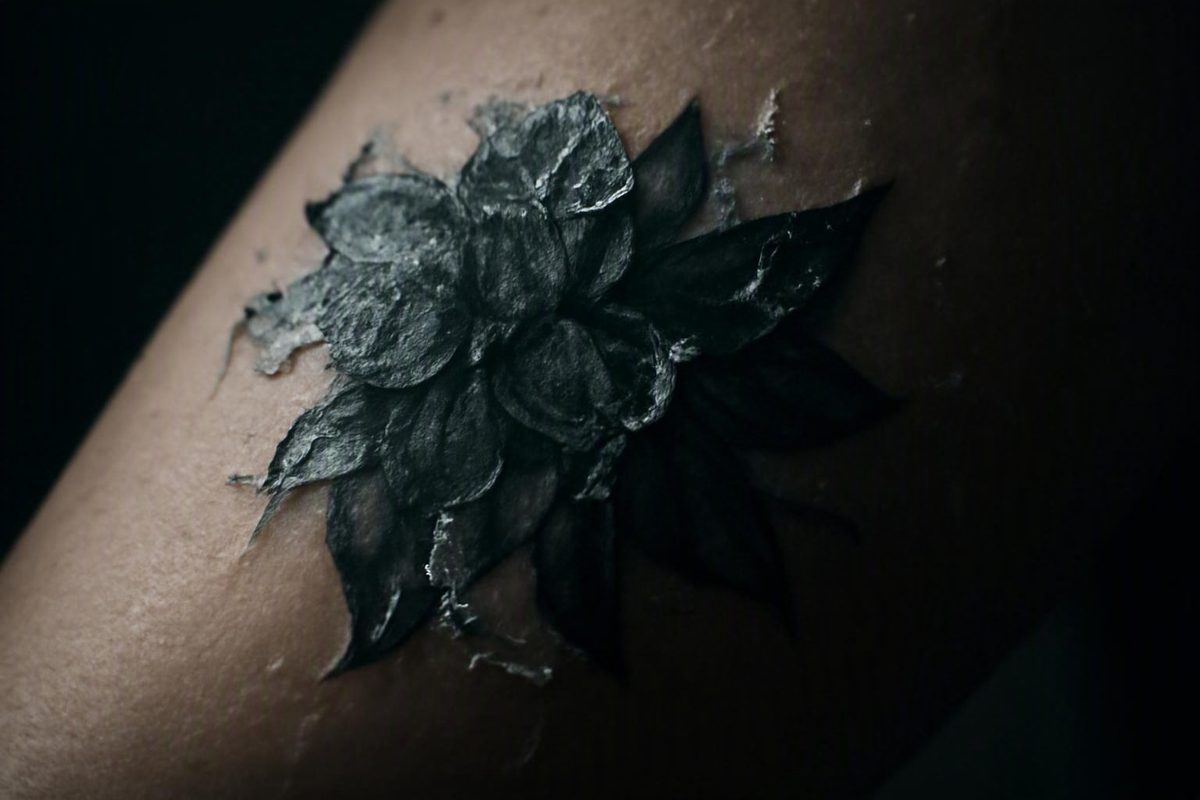
The short answer: most tattoos peel for about one to two weeks
How long does it take a tattoo to peel? A new tattoo often starts peeling around days 3–5, although reported onset ranges from approximately day 2 to day 7. Visible flaking commonly lasts about a week and often settles within roughly 4–14 days. These are practical estimates, not deadlines every tattoo must meet according to a tattoo-studio overview of peeling duration.
It helps to distinguish the main period of active peeling from occasional dry flakes or thin, localized scabs. The most obvious shedding may last only several days, while a few areas continue flaking after the rest of the tattoo looks calmer. This difference helps explain why one guide may describe about a week of peeling while another allows two weeks or longer for the last flakes to disappear.
For example, light flaking that starts on day four, becomes more noticeable over the following week, and tapers by day 12 fits the commonly described course. A tattoo that starts peeling sooner, begins closer to the end of the first week, or sheds very little may also fall within reported variation.
These ranges come mainly from tattoo studios and commercial aftercare publishers, not from a robust clinical timetable. Sources also use terms such as “peeling,” “surface healing,” and “fully healed” differently. Treat the numbers as general benchmarks rather than guarantees or diagnostic thresholds.
Time alone cannot tell you whether something is wrong. A few diminishing flakes after two weeks are different from heavy or worsening peeling accompanied by increasing pain, heat, redness, swelling, discharge, rash, or illness. Pay attention to severity and, above all, whether the area is improving or deteriorating.
An approximate day-by-day peeling timeline
The following timeline describes a commonly reported pattern, not a universal schedule. Dressing type, tattoo characteristics, placement, skin condition, aftercare, and individual healing can all affect what you see.
| Approximate period | What you may notice |
|---|---|
| Days 1–2 | The tattoo may look fresh and feel tender without visible peeling. Some commercial guidance reports that peeling can begin as early as day two, but it may start later within a broader day 2–7 range. |
| Days 3–7 | Fine flakes, dry patches, or thin localized scabs may begin. One tattoo-healing guide places the typical onset around day four, with a broader range of days three through seven in its approximate progression. |
| Days 7–10 | Peeling may be most visible during this period, although that more precise sequence comes from a commercial guide rather than a clinical timetable and should be treated as an estimate. |
| Days 11–14 | Substantial improvement is commonly reported, though small sections may remain dry or flaky. Broader tattoo-industry estimates place most peeling within approximately 4–14 days while acknowledging individual variation. |
| After two weeks | Occasional light flakes may reflect lingering surface recovery. Some commercial healing-stage descriptions allow peeling to continue into later weeks, but heavy or worsening peeling deserves professional assessment rather than diagnosis by duration alone. |
Days 1–2: peeling may not have started
During the first couple of days, the tattoo is at an earlier point in recovery. Depending on the dressing and your artist’s instructions, you may not be looking directly at it throughout this period. If visible, it may appear glossy, tender, mildly swollen, or simply fresh rather than flaky.
Do not try to make peeling happen. Scrubbing, rubbing the skin dry, or deliberately withholding appropriate moisture does not create a healthier timeline. The absence of flakes is not a problem by itself.
Days 3–7: the common onset window
This is when many people first notice fine flakes, dry patches, or thin areas of scabbing. The tattoo may look less vivid because dry surface skin is sitting over it. Itching can also become more noticeable as the area dries and renews.
Peeling may not begin evenly. Dense shading can look different from lightly worked linework, and one edge may start shedding before the center. Uneven timing does not automatically mean that the pigment underneath is uneven.
Days 7–10: flaking may be most noticeable
For some tattoos, this is the messiest-looking part of the process. Flakes may collect on clothing or detach during gentle washing. The tattoo can look cloudy, ashy, dull, or temporarily patchy.
“Heaviest” should not mean that you need to force wet sheets of skin away or that inflammation should be getting worse. It refers only to naturally detached surface flakes becoming more visible. Leave any attached skin alone, even if one edge has lifted.
Other tattoos may already be settling by this point. Some never have an obvious peak because they shed in tiny particles rather than conspicuous flakes.
Days 11–14: substantial improvement is common
By the end of the second week, much of the visible peeling often has subsided. Itching may decrease, and the tattoo may look more settled, although small areas can remain dry or flaky.
Different sections do not necessarily finish at once. Areas that bend frequently, were worked more heavily, or experience clothing contact may look different from flatter, more protected sections.
After two weeks: look at severity and direction, not just the date
A few diminishing flakes after two weeks can fall within reported variation, especially on larger, detailed, or heavily saturated work. Some publishers include isolated flakes or localized scabs when describing a longer peeling stage.
Duration alone cannot diagnose infection, allergy, irritation, or another complication. More useful questions include:
- Is the amount of peeling decreasing?
- Is pain improving rather than intensifying?
- Is redness receding rather than spreading?
- Is the skin becoming less warm and swollen?
- Is there pus, unusual discharge, foul odor, a persistent raised rash, or illness?
Light, improving flaking is different from ongoing heavy shedding with worsening inflammation. If the appearance concerns you, seek advice from a qualified healthcare professional rather than trying to diagnose it from a calendar or photograph.
Why tattoos peel—and why colored flakes usually are not lost ink
Tattooing repeatedly penetrates the skin and triggers a healing response. As the area recovers, damaged and dead cells in the outer skin are shed. The visible flakes therefore come primarily from the epidermis, the skin’s outer layer.
Tattoo pigment is deposited more deeply in the dermis. That distinction explains why black, gray, or brightly colored flakes do not automatically mean the embedded tattoo is falling out. A medically reviewed skincare overview likewise distinguishes shedding surface skin from pigment placed beneath it when explaining tattoo peeling.
Flakes may look colored because the shedding surface contains dried residue or staining associated with the fresh tattoo. This can be alarming over a dark or highly saturated design, but naturally detached flakes are not a reliable measure of how much pigment remains below the surface.
That reassurance has limits. It does not mean pigment can never be disturbed or that every tattoo will heal perfectly evenly. The important distinction is between skin that falls away naturally and attached skin or scabs that are removed before they are ready.
Pulling an attached flake can disturb tissue that has not finished separating. Picking, scratching, or scrubbing may also reopen or irritate the area and contribute to patchiness or scarring. A lifted edge does not mean the entire flake is ready to come off.
Temporary dullness is also commonly reported. Dry, cloudy, or shedding surface skin changes the tattoo’s appearance, making it look faded, milky, muted, or uneven. That temporary appearance is not a dependable preview of the healed result.
The conservative approach is to clean the tattoo gently, pat it dry, use suitable moisture sparingly if instructed, and allow flakes to detach on their own.
What normal peeling can look and feel like
Routine tattoo peeling is generally described as light and thin, sometimes compared with the fine flaking that follows sun exposure. You may notice tiny dry particles, flexible flakes, or isolated thin scabs. The skin can feel tight or mildly itchy, and the tattoo may appear dull beneath the shedding layer.
Commonly reported features include:
- Fine or thin flaking
- Dryness or tightness
- Mild itching
- Slight tenderness
- Temporary dullness, cloudiness, or patchiness
- Small areas that finish peeling at different times
- Very little visible peeling in some tattoos
The amount varies substantially. One tattoo may shed obvious colored flakes, while another produces little more than subtle dryness. Some tattoos show almost no visible peeling and may still appear to heal normally. Peeling intensity is not a score for how well the tattoo was applied or how successfully it is healing.
Scabbing requires more caution. Some tattoo-industry sources consider thin, nearly translucent, localized scabs compatible with routine healing. That does not establish that every scab is harmless, nor does a small scab automatically prove there is a complication.
Concern rises when affected areas are thick, raised, cracked, widespread, wet, oozing, foul-smelling, or fluid-filled—particularly when pain, redness, heat, or swelling is increasing. A tattoo-parlor guide makes a similar distinction between thin localized scabbing and heavy or raised scabs accompanied by other worsening changes in its discussion of tattoo scabbing.
| More consistent with reported routine peeling | More concerning, especially if worsening |
|---|---|
| Fine, dry flakes | Thick, raised, cracked, or widespread crusting |
| Mild itching | Severe or escalating itching with a persistent rash |
| Slight tenderness that improves | Increasing or severe pain |
| Temporary dull or cloudy appearance | Rapidly worsening skin changes |
| Thin, localized dry areas | Oozing, pus, unusual fluid, or foul odor |
| Limited redness that recedes | Redness that spreads or intensifies |
| Gradual improvement | Increasing warmth, swelling, or illness |
This comparison is not a diagnostic tool. Tattoo pigment, skin color, lighting, and dressing residue can make visual assessment difficult. Infection and allergic reactions cannot be reliably ruled in or out from a photograph or checklist.
The direction of change matters. An area becoming less tender, less red, and less swollen is more reassuring than one growing hotter, more painful, or more inflamed from day to day.
How to care for a tattoo while it peels
For routine healing, begin with the instructions supplied by your tattoo artist. The artist knows how the tattoo was completed and which dressing was used. Aftercare methods differ, so an arbitrary online schedule should not replace individualized instructions.
If you develop signs of infection, systemic illness, or a severe or rapidly worsening reaction, however, an artist’s routine aftercare advice is not a substitute for medical assessment.
Wash gently
Use clean hands and cool or lukewarm water. Clean the area gently with an appropriate mild product rather than using a washcloth, sponge, brush, or exfoliating tool. Avoid prolonged soaking.
After washing, pat rather than rub the tattoo dry with a clean material appropriate to your artist’s instructions. Rubbing can catch flakes and cause unnecessary irritation. Commercial aftercare guidance commonly recommends gentle hand-washing and patting dry rather than disturbing peeling skin.
There is no single washing frequency suitable for every tattoo, dressing system, body site, or artist’s protocol. Follow the instructions you received unless a healthcare professional advises otherwise.
Moisturize lightly, not heavily
If your instructions call for moisturizer, use an appropriate fragrance-free product in a light, thin layer. The goal is not to keep the tattoo buried beneath a thick, continuously wet coating.
More is not automatically better. If the skin remains heavily coated, sticky, or saturated, review the amount with your artist. Avoid rotating through several balms, ointments, or cosmetic products in an attempt to force faster healing.
The available evidence does not establish that a particular branded cleanser, balm, ointment, or bandage dramatically speeds healing, prevents infection, preserves pigment, or works for everyone.
Do not remove flakes yourself
Avoid:
- Picking
- Scratching
- Scrubbing
- Pulling
- Manually exfoliating
- Using peeling products or abrasive tools
- Shaving or waxing over the unhealed area
Even when a piece of skin looks loose, part of it may remain attached. Let gentle washing and ordinary movement release flakes only when they are ready.
If itching becomes difficult to ignore, minimize avoidable irritation and ask your artist or a clinician what is appropriate for your circumstances. Do not improvise with fragranced lotions, harsh ingredients, or treatments intended for unrelated skin conditions.
Reduce rubbing and chafing
Wear loose, clean clothing that does not repeatedly drag across the tattoo. Watch for seams, waistbands, footwear, straps, and protective equipment that press on the area.
Published tattoo-care sources conflict over whether movement and friction make peeling finish faster or slower. There is no need to predict the effect: repeated rubbing can irritate healing skin, so minimizing it is the practical goal.
Avoid soaking and unnecessary exposure
While the tattoo remains visibly unhealed, avoid prolonged soaking and swimming. A brief, gentle wash is different from submerging the tattoo in a bath, pool, hot tub, lake, or ocean.
Also avoid shaving, waxing, and unnecessary sun exposure over the healing area. When practical, use loose clothing or another nonabrasive physical barrier from sunlight. The supplied evidence does not establish a universal point at which sunscreen becomes appropriate, so do not assume it should be placed directly on skin that remains open, peeling, or visibly unhealed.
Bandage routines differ as well. Do not remove, replace, or extend a dressing simply because someone else followed another schedule. Follow the artist’s instructions for the specific dressing used and seek professional advice if you develop marked adhesive irritation or other concerning symptoms.
Why one tattoo may peel longer than another
There is no reliable formula that converts tattoo size into an exact number of peeling days. Even two tattoos on the same person can heal differently.
Size, detail, and saturation
A large piece exposes more skin to the tattooing process than a tiny design. Dense shading, extensive color packing, repeated passes, and detailed work may also mean that some areas were worked more heavily.
As a general tendency, larger, detailed, or heavily saturated tattoos may peel longer or more visibly than small, simple work. This is not a rule and cannot predict whether a particular tattoo will peel for seven, ten, or fourteen days.
Placement, bending, and clothing contact
A tattoo near a joint, under a waistband, inside footwear, or in another frequently rubbed location experiences more movement and contact. One industry source suggests flexion and friction may prolong peeling, while another suggests movement and clothing friction can make peeling happen faster.
Because those claims conflict, it is more useful to limit irritation than to predict whether movement will shorten or extend the timeline.
Placement can also cause different parts of the same tattoo to behave differently. A flat, protected section may settle before an edge that bends or catches on clothing.
Personal healing differences
Reported variables include:
- Baseline skin condition and dryness
- Personal healing rate
- Age
- General health
- Immune function
- Aftercare practices
- Dressing type and duration
- Amount and type of ink
- Length and intensity of the tattoo session
These are possible influences, not a calculator. Commercial healing-stage guidance attributes variation to combinations of design, placement, skin, health, immune function, and aftercare rather than one decisive factor when describing tattoo recovery.
The supplied evidence does not support precise schedules for people with eczema, psoriasis, diabetes, immune conditions, medication-related healing concerns, or adhesive allergies. If you have a condition that affects your skin, immune response, healing, or wound care—or you develop a dressing reaction—consult a qualified clinician for individualized guidance.
When peeling may need medical attention
Peeling alone does not establish infection, and the number of days a tattoo has been flaky cannot diagnose a complication. Routine peeling should generally move toward less irritation rather than increasing inflammation.
Signs that warrant medical assessment include:
- Redness that worsens or spreads
- Increasing warmth
- Swelling that grows rather than recedes
- Pain that intensifies rather than improves
- Pus or unusual discharge
- Foul odor
- Red streaks extending from the area
- Fever or chills
- Hives
- Feeling generally ill
- Painful bumps
- A persistent raised rash
- Rapidly worsening symptoms
These findings can have more than one cause, which is why home diagnosis is unreliable. A medically reviewed commercial skincare article advises medical evaluation for worsening redness or swelling, painful bumps or rash, fever, chills, or feeling ill rather than relying on self-treatment.
The direction of change is crucial. Mild initial tenderness or redness differs from an area becoming redder, hotter, more swollen, or more painful as time passes. Do not dismiss escalation simply because some peeling is expected.
Seek same-day medical assessment for spreading redness, fever, red streaking, or pus. Suspected infection, systemic illness, severe allergic symptoms, or rapidly worsening symptoms require prompt assessment by a qualified healthcare professional. The supplied sources do not provide a strong independent clinical triage framework, so if symptoms appear severe or you are unsure how urgently to act, use local urgent or emergency medical services.
A tattoo artist can explain the dressing, routine aftercare instructions, and ordinary cosmetic changes during healing. An artist should not be treated as a substitute for a clinician who can diagnose or treat infection, systemic illness, or a significant reaction.
This article provides general information and is not medical advice.
Peeling has stopped—but the tattoo is still healing
The end of visible flaking is one milestone, not the end of the entire healing process. The surface can look smoother while recovery continues beneath it.
“Fully healed” is used inconsistently. Some sources mean that the visible surface has closed and stopped peeling; others refer to deeper recovery in the dermis. Commercial tattoo-care sources sometimes place surface healing at around four weeks, while other guides describe deeper healing continuing for four to six weeks or substantially longer. These estimates are not a universal clinical timetable.
For a broader overview of the stages beyond peeling, see the full tattoo-healing timeline.
A tattoo that stops peeling around day 12 is not automatically ready for every activity on day 13. Do not use the disappearance of flakes alone as permission to resume:
- Swimming
- Prolonged bathing or soaking
- Shaving or waxing over the area
- Intense or unnecessary sun exposure
- Clothing or equipment that causes persistent chafing
Continue treating the area gently while it still looks shiny, cloudy, dry, tender, or otherwise unhealed. Follow your artist’s instructions, and seek medical guidance if worsening symptoms develop.
The end of peeling is also not a precise date on which the final appearance can be judged. Surface dryness, newly recovered skin, and ongoing deeper healing can all affect how the tattoo looks. The available evidence is not strong enough to give a definitive date for evaluating the final result or arranging a touch-up.
Frequently asked questions
Is it normal if my tattoo is not peeling?
Yes. Some tattoos produce very little visible peeling, and a few may not appear to peel at all. The flakes may also be so fine that they detach during gentle washing without being noticed.
Do not provoke peeling by scrubbing, aggressively drying the tattoo, or changing your care routine without a clear reason. Look instead at the overall direction of recovery. A tattoo becoming less tender and less inflamed without increasing heat, pain, swelling, discharge, or illness may still be progressing normally.
Ask your artist about routine cosmetic healing and contact a clinician for medical concerns.
Is tattoo peeling after two weeks normal?
Occasional light flakes after two weeks can fall within reported variation, especially when the amount is decreasing and no symptoms are worsening. Some sources describe longer timelines because they include isolated flakes or localized scabs after the main peeling phase.
Continued heavy peeling is different, particularly when accompanied by increasing redness, warmth, swelling, pain, discharge, odor, rash, fever, chills, or illness. Duration alone cannot identify the cause, so seek professional assessment when peeling is substantial, worsening, or paired with concerning symptoms.
Do black or colored flakes mean my tattoo is losing ink?
Not automatically. Visible flakes come from the epidermis, while tattoo pigment is deposited more deeply in the dermis. Surface residue can make shed skin look black, gray, or colored without proving that the embedded design is disappearing. Commercial aftercare guidance likewise notes that ink-colored flakes do not necessarily represent loss of the pigment beneath the surface when discussing tattoo peeling.
Naturally shed flakes are different from attached skin or scabs removed by force. Picking can irritate the area and may contribute to patchiness or scarring. Let the skin detach naturally and avoid judging the tattoo while dry or cloudy skin still covers it.
Can I pull off tattoo skin that is already loose?
No. Even if one edge looks loose, another part may still be attached to healing tissue. Pulling can irritate or reopen the area.
Let flakes release during gentle washing or ordinary movement. Do not trim, peel, scrub, scratch, or exfoliate them. If a flake repeatedly catches on clothing, reduce the friction rather than tugging at it.
If skin is accidentally removed and the area becomes increasingly painful, red, warm, swollen, or begins producing unusual discharge, contact a healthcare professional.
Who should I contact about a peeling tattoo: my artist or a doctor?
Contact your tattoo artist for questions about the dressing they applied, their routine aftercare instructions, and ordinary cosmetic changes during healing.
Contact a qualified healthcare professional for suspected infection, a persistent raised or painful rash, severe allergic symptoms, systemic illness, or rapidly worsening symptoms. Seek same-day assessment for spreading redness, fever, red streaks, or pus. An artist’s experience with routine healing does not replace clinical diagnosis or treatment.
The practical takeaway
Tattoo peeling commonly begins around days 3–5 and often settles within roughly 4–14 days, although lighter, earlier, later, or longer variation can occur. One commercial manufacturer guide similarly describes onset around day four or five and usual improvement within one to two weeks while emphasizing individual variation.
Ordinary flakes come from surface skin and do not automatically mean the tattoo is disappearing. Handle the area gently, do not pick or pull at it, and remember that healing continues after visible peeling stops.
Seek medical care for spreading redness, increasing heat or pain, growing swelling, pus, unusual discharge, red streaks, fever, chills, hives, a persistent painful rash, or feeling ill.