
7 min read ·
How Numbing Products Can Change Tattooing and Healing
Numbing cream has no proven effect on tattoo healing, but formulas can alter skin during a session. Check application rules in Oregon and Michigan.
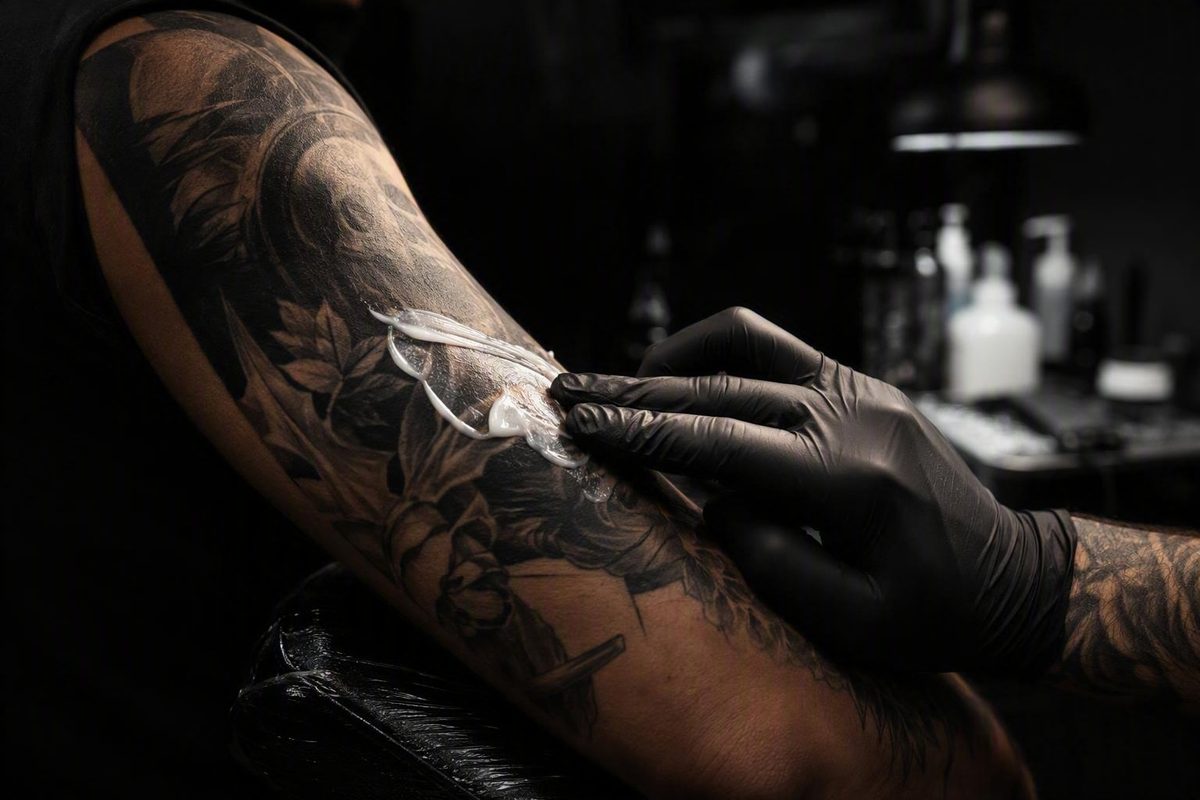
Pre-session numbing cream has not been shown by the reviewed sources to delay tattoo healing, cause infection or scarring, reduce pigment retention, or increase touch-ups. The practical risk is product-specific: some artists report temporary swelling, irritation, or altered texture that can make tattooing harder. In Oregon and Michigan, tattoo artists cannot apply these anesthetics; self-application rules and studio acceptance still need to be checked.
Choose your state, product, placement, session length, and skin condition to see who may apply it and what trade-off to expect.
This tool separates application rules from the expected tattooing and healing trade-offs. It does not calculate a dose or replace the product label.
Ask the studio before self-applying it, identify the exact product, and follow its label.
Healing trade-off: No delayed healing, infection, scarring, pigment loss, or added touch-up risk has been established. Temporary irritation, swelling, texture changes, stencil difficulty, or sensitivity may affect the session.
For a shorter session away from the eyes on intact skin, the source set identifies no additional placement or skin-condition warning beyond the product label and studio policy.
Addresses professional scope or the available reporting, not medical suitability.
Temporary skin changes are practitioner observations, not measured healing outcomes.
Comparative rates and timelines are unavailable for every listed product.
Application and Evidence Matrix
Without JavaScript, all rows remain visible. With JavaScript, the table filters to the selected state and product.
| State | Product | Artist May Apply? | Client Status | Healing Evidence |
|---|---|---|---|---|
| Oregon | OTC lidocaine cream | No; outside the tattoo license scope | Self-administration reportedly not regulated by the tattoo board; confirm studio acceptance | No comparative healing, infection, scarring, pigment, or touch-up data |
| Oregon | Bactine or OTC numbing spray | No; outside the tattoo license scope | Self-administration reportedly not regulated by the tattoo board; label and studio policy still apply | No comparative healing outcomes supplied |
| Oregon | Prescription topical anesthetic | No authority established for the tattoo artist to administer it | Use only under product-specific prescriber directions; supplied sources do not resolve every application rule | No comparative tattoo-healing outcomes supplied |
| Michigan | OTC lidocaine cream | No under the 2025 ban described in the topic materials | Self-application status is not established by the supplied sources; verify current rules | No comparative healing, infection, scarring, pigment, or touch-up data |
| Michigan | Bactine or OTC numbing spray | No under the 2025 ban described in the topic materials | Self-application status is not established by the supplied sources; verify current rules | No comparative healing outcomes supplied |
| Michigan | Prescription topical anesthetic | No under the artist-application ban described in the topic materials | Ask the prescriber and verify current local rules | No comparative tattoo-healing outcomes supplied |
| Another jurisdiction | OTC lidocaine cream | —; not established by the reviewed sources | Check local rules and studio policy before application | No comparative healing, infection, scarring, pigment, or touch-up data |
| Another jurisdiction | Bactine or OTC numbing spray | —; not established by the reviewed sources | Check local rules, the label, and studio policy | No comparative healing outcomes supplied |
| Another jurisdiction | Prescription topical anesthetic | —; not established by the reviewed sources | Follow prescriber directions and check local administration rules | No comparative tattoo-healing outcomes supplied |
Sources: Oregon reporting by OPB and KPTV; Oregon Health Licensing Office body-art statutes; Michigan 2025 ban as stated in the supplied topic brief; practitioner observations from Inkdulgence Tattoo. No reviewed source supplies comparative tattoo-healing rates.
Procedural Skin Changes Are Not Proof of Delayed Healing
The reviewed sources do not include controlled studies comparing healed tattoos completed with and without a specified numbing product. They provide no comparative figures for healing time, infection, scarring, pigment retention, patchiness, touch-up frequency, or final appearance.
That does not establish that every product and application method is harmless. “Numbing cream” covers different formulations, ingredients, concentrations, and directions. The evidence also does not define universal limits for quantity, treatment area, exposure time, covering the product, repeated application, or combining products.
Tattoo practitioners have reported short-term effects including redness, swelling, irritation, sensitivity after numbness wears off, altered or rubbery texture, reduced stencil stability, and greater difficulty working cleanly. Numbing may also wear off during a longer session. Inkdulgence Tattoo describes these as practical observations, not measured complication rates.
These effects concern the condition of the skin while the stencil is placed and pigment is deposited. They do not establish what happens during later wound repair. A tattoo can be more difficult to execute without numbing cream having been proven to prolong healing, just as a lack of comparative healing data cannot guarantee that no formulation or reaction will affect the finished tattoo.
Practitioners also disagree about the cause of reported texture changes. Tattooers quoted by OPB said numbing products can change the skin or make it harder to tattoo. A cosmetic tattoo practitioner in the same report attributed such changes to formulas containing vasoconstrictors such as epinephrine rather than topical lidocaine itself (OPB’s Oregon reporting). Neither position is a controlled clinical conclusion.
Product Type, Application, and Skin Condition Change the Decision
A lidocaine cream, a Bactine-type spray, and a prescription anesthetic should not be treated as interchangeable. Active ingredients, inactive ingredients, label directions, and legal controls can differ. The reviewed material contains no controlled comparison showing that one category produces better or worse tattoo healing than another.
The exact application matters as much as the product name. The sources do not support a universal dose, application time, concentration, covering method, or repeat-use schedule. Follow the label for the exact package rather than transferring instructions from another product or a generic online routine.
Skin condition matters before the first needle pass. The commercial studio guidance advises against applying numbing cream to broken, irritated, sunburned, scratched, rash-affected, freshly shaved, or otherwise damaged skin. Its warning about freshly shaved skin is studio guidance rather than a universal clinical rule for every formulation. An already irritated area should be shown to the artist instead of being concealed beneath a product.
Placement can also affect the decision. Oregon reporting described two historical cosmetic-tattoo incidents in which topical-anesthetic use was followed by hospital visits for eye irritation. The reporting does not provide enough detail about the products, quantities, application methods, diagnoses, causality, or healing outcomes to generalize those incidents to ordinary tattoo wounds (KPTV’s report on the dispute). It does support treating use near the eyes as a distinct question requiring product-specific professional advice.
Session length affects workflow rather than establishing a healing outcome. A product may wear off during a longer appointment, but the reviewed sources provide no duration that applies across products. Reapplication should not be improvised merely because sensation returns.
Oregon and Michigan Artists Cannot Apply the Anesthetic
The Oregon Health Authority’s 2026 practice clarification states that Oregon-licensed tattoo artists may not administer over-the-counter or nonprescription topical anesthetics. Applying topical anesthesia falls outside the tattoo artist’s licensed scope of practice. The agency reportedly distinguished artist administration from a client self-administering an over-the-counter product, which it said is not regulated by the tattoo licensing board.
That distinction determines who may apply the product under the tattoo license. It does not show that lidocaine cream or Bactine delays wound repair, causes ink loss, or produces a worse healed result.
Oregon separately regulates tattooing as a licensed body-art practice, including practitioner standards related to instrument sterilization and client case-history records. The linked statutory document is labeled an unofficial copy of the 2025 edition and directs readers to the Oregon State Legislature for the official version (Oregon body-art statutes PDF). Those statutes provide regulatory context but do not supply tattoo-healing data.
Michigan’s 2025 ban likewise prevents tattoo artists from applying topical anesthetics. The supplied source set does not include the underlying Michigan rule text or establish whether and under what conditions clients may self-apply a particular product. A Michigan client should therefore verify the current rule and the studio’s policy before using anything.
Outside Oregon and Michigan, the reviewed materials do not establish who is legally permitted to apply an over-the-counter or prescription topical anesthetic. Local law, professional scope, and studio policy must be checked separately. An artist’s willingness to work over a self-applied product is not the same as medical approval of that product.
Tell the Artist Before Applying Anything
Identify the exact product before the appointment. A product name or clear image of the package and ingredient panel is more useful than asking whether the studio permits “numbing cream.” The artist may base the decision on placement, design, session length, stencil process, skin condition, and experience with that formulation.
Do not arrive with an undisclosed product already applied. The artist may need to inspect the skin and may decline to tattoo an area that looks red, swollen, irritated, or texturally different. Approval means the artist is prepared to work with the product; it does not certify that the product is medically suitable for a particular client.
If the label conflicts with studio policy, resolve the conflict before the session rather than changing the amount, exposure time, covering method, or application schedule. The sources reviewed here do not support adding more product, leaving it on longer, mixing products, or repeating an application to extend numbness.
People with allergies, sensitive skin, pregnancy, medication use, heart issues, medical conditions, or product-specific concerns are directed by the commercial studio source to consult a doctor or pharmacist. The reviewed evidence does not establish detailed precautions for those circumstances. Any consultation should identify the exact product, ingredients, intended placement, and proposed use.
Numbing Products Are Not Routine Fresh-Tattoo Aftercare
Approval to use a product before tattooing does not mean it belongs on the open tattoo afterward. The commercial studio guidance describes numbing cream as a pre-session product and advises against reapplying it to a fresh tattoo as routine aftercare.
Once the session ends, follow the cleaning, covering, and aftercare instructions given for that tattoo. Do not substitute numbing cream for an approved ointment or lotion or add it merely because the area hurts after the anesthetic wears off.
Spreading redness, fever, streaking, or pus warrants prompt medical attention rather than experimentation with another topical product. Symptoms should not automatically be blamed on numbing cream, but retaining the packaging and noting what was applied, where, and approximately when can help an artist or healthcare professional assess the situation.
The Evidence Does Not Quantify Healing or Touch-Up Risk
No comparative healing time is available for tattoos completed with and without a specified lidocaine product. The reviewed sources also provide no infection rates, scarring assessments, standardized pigment-retention measurements, patchiness rates, or comparative touch-up figures.
Claims that numbing cream “makes ink fall out” therefore go beyond the evidence. So does a guarantee that numbing cream cannot affect the finished tattoo under any circumstances. Practitioner reports of rubbery, swollen, or difficult-to-tattoo skin may explain studio restrictions, but they cannot isolate the product as the cause of a later healing problem.
A stronger answer would require research documenting the exact formulation and concentration, amount, treatment area, exposure time, use of a covering, condition of the skin, tattoo placement and style, session length, artist method, adverse events, healing duration, infection, scarring, pigment retention, patchiness, touch-ups, and appearance after a defined follow-up period. The reviewed source set contains no such study.
Lidocaine Has No Established Effect on Healing Time
The available sources do not establish that pre-session lidocaine cream makes a tattoo take longer to heal. They also do not establish a universal “correct use” protocol that has been tested against tattoo-healing outcomes.
Additional ingredients may differ between lidocaine products. A favorable result with one formula does not predict the result with another formula, another placement, a longer session, different skin, or a different artist’s process.
Bactine Has the Same Evidence Gap
The reviewed reporting discusses Bactine and other over-the-counter numbing sprays in the context of artist application and professional scope. It does not provide comparative healing results for tattoos completed with and without Bactine.
In Oregon, the artist cannot apply the spray as a topical anesthetic. That restriction is not proof that Bactine damages a tattoo. Whether a client may self-apply it, whether the studio will work over it, and whether the label permits the intended use are separate questions.
A Prescription Does Not Authorize Artist Application
A prescription topical anesthetic should be used only under the directions supplied for the person and product. A tattoo artist’s license does not become medical authority merely because the product was prescribed.
The reviewed sources provide no tattoo-healing comparison for prescription anesthetics. They also do not establish who may administer every prescription product in every jurisdiction. The prescriber, dispensing pharmacist, local rules, and the tattoo studio all have distinct roles in that decision.