
3 min read ·
Coconut Oil for Tattoo Aftercare: Is It a Good Choice?
Coconut oil can moisturize dry skin, but fresh tattoos are different. Learn what the evidence supports, when to avoid it and how to try it on healed skin.
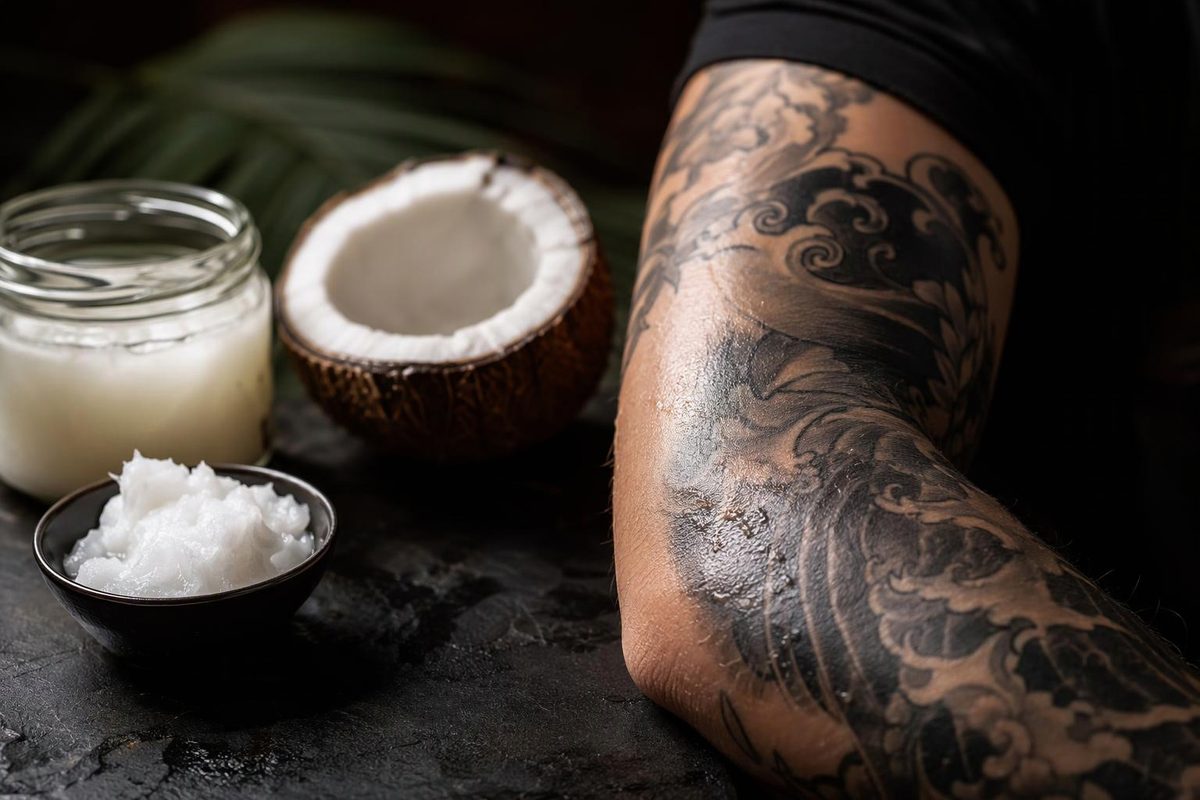
Coconut oil can moisturize dry skin, but for a fresh, healing tattoo, a cautious choice is to stick with the product in your aftercare instructions. Use the simple moisturizer or recommended ointment, and save coconut oil for healed, intact skin—if your skin tolerates it.
The distinction matters: evidence that an oil helps dry skin is not proof that it helps a tattoo wound heal.
What coconut oil can—and cannot—do
Coconut oil helps reduce moisture loss from the skin. A small trial summarized in a 2021 wound-care evidence review found virgin coconut oil and mineral oil comparably effective for mild-to-moderate dry skin. That trial involved 34 people applying oil to their legs, not people healing new tattoos.
The same review identified no studies of topical coconut products treating human wounds in its search of English-language evidence published through May 2021; its wound-healing evidence came from animal studies. That does not establish that coconut oil is harmful, but it does not justify promises of faster tattoo healing, better ink retention or fewer scars.
The review also describes antimicrobial findings for coconut-derived products. Those findings are not a reason to use coconut oil as a disinfectant or treatment for a suspected tattoo infection. Laboratory findings and studies of other skin conditions do not establish infection prevention in fresh tattoos.
Should you put it on a new or peeling tattoo?
Don’t introduce coconut oil just because the tattoo starts itching or peeling. Peeling skin is still healing skin, not a signal that any moisturizer is suitable.
For routine aftercare, Cleveland Clinic’s dermatologist guidance recommends gentle washing, a simple moisturizer or recommended ointment, and leaving flakes and scabs alone. If you need a product, choose a straightforward fragrance-free tattoo lotion rather than experimenting with several oils or scented blends.
If your artist specifically recommended coconut oil, ask when to begin, which formulation they mean and how much to apply. That recommendation is an aftercare preference, not proof that coconut oil outperforms other moisturizers. Keep following your dressing instructions rather than removing a dressing early to apply it.
Using coconut oil once the skin has healed
Consider it only once the surface is intact, with no open areas, drainage, scabs or active peeling. Even then, coconut oil is optional—not something your tattoo needs to stay healthy.
If you want to try it:
- Choose plain coconut oil rather than a fragranced blend. “Organic” or “virgin” does not establish tattoo-healing benefits.
- Try a small amount on intact skin away from the tattoo first, and monitor for irritation. A successful trial does not guarantee you will never react.
- Spread a small amount lightly; there is no need for a thick coating.
- Skip it on acne-prone areas. Cleveland Clinic’s coconut-oil guidance warns that it can clog pores and advises acne-prone people to avoid using it on the shoulders, chest and back.
If you already applied it
One application alone does not tell you that anything has gone wrong. Don’t scrub the tattoo to remove it; gently wash it as your routine directs, and return to your recommended aftercare product.
Stop using coconut oil if you notice burning, a rash or new bumps after applying it. Seek medical care right away for spreading redness, worsening pain, pus, fever or chills—don’t try to manage those changes with more oil. The American Academy of Dermatology identifies these as possible infection signs that need assessment right away.