
8 min read ·
How Doctors Treat Different Types of Tattoo Infection
Learn how cellulitis, abscesses and delayed nodules change tattoo infection care, why a clinician must choose treatment, and which signs need urgent help.
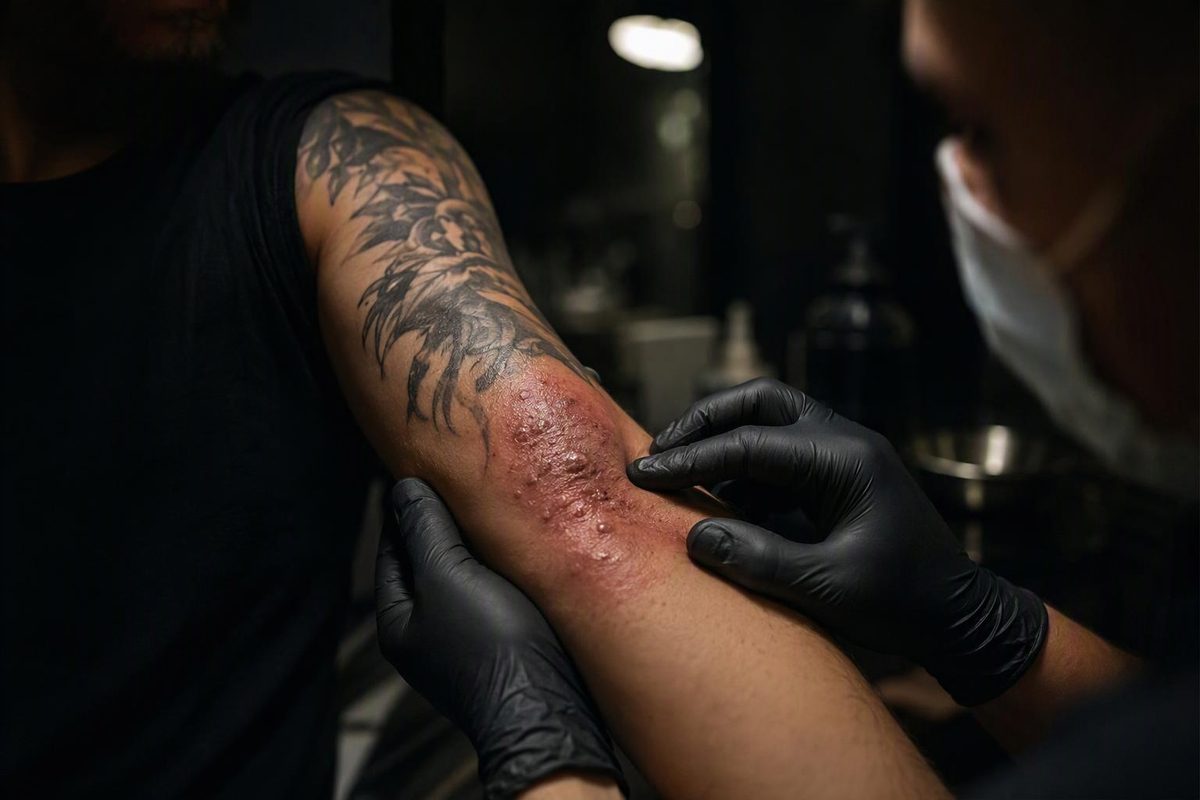
There is no single antibiotic that is right for every tattoo infection. Spreading or worsening redness, warmth, swelling or pain needs a same-day medical assessment. Do not try leftover tablets or rely on an over-the-counter antibiotic ointment, because treatment may require oral or intravenous medicine, drainage, laboratory testing or care for something that is not an infection.
The prescription depends on what the clinician finds: cellulitis, a pocket of pus, an unusual infection associated with contaminated ink or a condition that resembles infection. Medication allergies, pregnancy, immune health, severity, previous MRSA infection and local resistance patterns can also change the choice. The available evidence does not support naming one drug or dose that readers can safely use for every infected tattoo.
Choose the pattern that best matches what you see; the result shows the appropriate level of care, not a diagnosis.
Match The Symptom Pattern To The Next Step
This cannot select a medicine or diagnose the skin. Choose the closest pattern.
No single antibiotic fits every tattoo problem. Spreading or worsening symptoms need same-day medical assessment; severe whole-body symptoms need emergency help.
Pattern Guide
Sources: American Academy of Dermatology, IDSA skin-infection guidance, CDC tattoo-associated outbreak report and NHS cellulitis guidance.
Worsening Symptoms Need More Attention Than Early Redness
A fresh tattoo is a skin wound, so some surface changes can occur during ordinary healing. Mild soreness, limited redness, a little clear fluid, itching and flaking do not by themselves establish that bacteria are present. The direction of the symptoms matters: ordinary irritation should not keep becoming more painful, hot, swollen or widespread.
Changes that are more concerning include:
- redness that becomes darker or spreads instead of fading
- pain that continues to increase
- worsening warmth or swelling
- pus, an open sore or a painful lump
- fever, chills or feeling generally unwell
- red streaks extending away from the tattoo
The American Academy of Dermatology advises seeing a doctor promptly when signs of infection appear. Same-day assessment is appropriate when local symptoms are spreading or worsening, even if there is no fever. Fever or a generally unwell feeling makes the situation more urgent.
If the change is limited to peeling, itching or mild surface redness, compare it with normal peeling and warning signs. That comparison should not be used to postpone care when the affected area is expanding, producing pus or becoming increasingly painful.
Photographs can help show whether redness has moved beyond an earlier boundary. Take a clear picture in consistent lighting and note when the change began. A photograph can document progression, but it cannot show whether there is a deep collection of pus or identify the organism responsible.
Cellulitis Usually Requires Systemic Treatment
Spreading redness without a distinct pocket of pus may be cellulitis, an infection involving deeper layers of skin. Treatment commonly involves an oral antibiotic that covers likely bacteria such as streptococci and, in some circumstances, staphylococci. Severe illness can require hospital care and antibiotics through a vein.
A symptom list or photograph is not enough to choose the drug safely. The clinician needs to examine the pattern, determine how ill the person is and look for a drainable collection. Clinical guidance distinguishes mild cellulitis from infections accompanied by systemic symptoms or MRSA risk factors, then adjusts treatment accordingly (Infectious Diseases Society of America).
That distinction is why two people with apparently similar red tattoos may receive different care. Previous MRSA infection, impaired immune defenses, medication allergies and pregnancy can affect the prescription. Local resistance patterns also matter because the likely effectiveness of an antibiotic is not identical in every place.
The tattoo itself does not determine the antibiotic. Its timing and appearance help the clinician identify the likely type of problem, while the examination and medical history guide the actual treatment. A prescription intended for a previous dental, respiratory or skin problem should not be assumed to cover the organisms involved in a new tattoo complication.
A Pocket of Pus May Need Drainage
A tender lump, soft swollen area or visible collection of pus may be an abscess. Antibiotics alone do not necessarily empty a closed pocket. The collection may need to be opened and drained by a medical professional so that infected material can escape.
IDSA guidance recommends culturing pus from an abscess, although treatment without a culture can be reasonable in a typical case. A culture can help identify an organism and guide treatment when the presentation, response or medical circumstances call for that information.
Whether an antibiotic is added after drainage depends on factors including systemic illness, impaired immune defenses and the response to earlier treatment. This is another reason there is no universal antibiotic for an infected tattoo: cellulitis without pus and an abscess are related skin-infection patterns, but they do not always require the same intervention.
Do not squeeze, puncture or lance a lump at home. Home drainage does not provide a sterile procedure, a proper examination or a laboratory sample. It can also delay care if the lump is not an ordinary abscess.
Pus is not the only reason to seek assessment. An open sore, rapidly increasing tenderness or swelling beneath the skin can also require examination even when no fluid is visibly draining.
Persistent Nodules Can Require Testing And Longer Treatment
Small bumps or nodules that persist within a tattoo need a different kind of assessment, especially when they are concentrated in one ink color. An allergic reaction can produce a similar appearance, but uncommon nontuberculous mycobacterial infections can also cause persistent lesions and may appear later than a typical bacterial skin infection.
These delayed or unusual patterns cannot be sorted out reliably by selecting a routine skin antibiotic. In documented tattoo-related outbreaks, confirmation involved cultures from wounds or skin biopsies. The distinction matters because these infections can require at least four months of treatment with two or more antibiotics, making an ordinary short course potentially ineffective (CDC outbreak report).
That duration comes from documented tattoo-related outbreaks and should not be applied to every bump on a tattoo. It shows why persistent nodules require a diagnosis rather than repeated short courses chosen without testing.
Tell the clinician explicitly that the problem began after tattooing. Describe when the tattoo was done, when the first lesion appeared and whether one color is affected more than the others. Calling it only a rash can leave out context that may influence the examination and decision to test.
If available, obtain the ink brand, color and lot or batch number from the artist. The FDA says those details may help determine the source of the problem and how to treat it (FDA tattoo-safety guidance). Notify the artist after arranging medical care so that the relevant ink can be identified and set aside if necessary.
Allergy And Irritation Can Resemble Infection
Not every red, itchy or bumpy tattoo needs an antibiotic. Ink reactions and irritation can resemble infection at the surface. Persistent bumps limited to one pigment, for example, do not prove whether the cause is allergic or infectious.
Using an antibiotic without establishing that bacteria are responsible can delay the correct diagnosis. It may also make a person believe that a continuing reaction is being treated when the underlying problem requires another approach.
The practical dividing line is not simply whether the tattoo looks red. Increasing pain, expanding redness, warmth, swelling, pus and systemic symptoms support prompt infection assessment. Itching, flaking or localized bumps still deserve evaluation when persistent, but they do not identify a bacterial species or determine an antibiotic.
A clinician may need to reconsider the original diagnosis when a presumed infection fails to improve as expected. Possible next steps mentioned in the clinical guidance and outbreak evidence include drainage, culture, biopsy, a different antibiotic or treatment for a noninfectious reaction.
Leftover And Topical Antibiotics Are Not Substitutes For Assessment
Tablets left from an earlier illness or supplied by another person may provide the wrong bacterial coverage. They can cause side effects while delaying examination, drainage or testing. The CDC advises taking antibiotics exactly as prescribed, without sharing them or saving them for later.
A partial supply also cannot be turned into an appropriate tattoo-infection course by guessing at the dose or duration. Those decisions depend on the diagnosis, prescribed medicine and individual medical circumstances. Starting leftover medication before an appointment may also complicate the history the clinician needs to evaluate.
An over-the-counter topical antibiotic is not a substitute for assessment of spreading redness, deep pain, pus or fever. Cellulitis may require oral treatment, an abscess may require drainage, and a rash may instead be an ink allergy or irritation. A surface ointment does not resolve those distinctions.
While arranging care, wash your hands before touching the area. Clean the tattoo gently with soap and water, then pat it dry. Do not squeeze, lance, pick or scratch the affected skin. These steps are temporary wound care, not treatment for a suspected deep or spreading infection.
Bring or provide a list of medication allergies, current medicines and relevant medical conditions. Mention pregnancy, immune-health concerns and any previous MRSA infection because the draft’s cited clinical guidance identifies patient risk and severity as factors in treatment selection. If any antibiotic has already been taken, tell the clinician its name, amount and timing rather than taking additional doses on your own.
Severe Systemic Signs Require Emergency Help
Go to an emergency department or call your local emergency number if a suspected skin infection is accompanied by a very high temperature, shaking chills, confusion, faintness, fast breathing or heartbeat, cold or clammy skin, loss of consciousness, or purple or dusky patches. These signs can indicate a serious complication (NHS cellulitis guidance).
Do not wait for an ordinary clinic appointment when these symptoms are present. A tattoo may be the visible starting point, but the emergency is the person’s overall condition rather than the appearance of the artwork.
Red streaks extending away from the tattoo, rapidly progressing local symptoms or a person who feels increasingly unwell also warrant prompt escalation. If uncertain about the local emergency route, use the emergency number or urgent medical service available in your jurisdiction.
Response During The First Days Determines Follow-Up
Once treatment begins, take the medicine exactly as prescribed. Do not stop because the skin looks somewhat better, extend the course with leftover tablets or add someone else’s medication.
NHS guidance notes that cellulitis symptoms can worsen during the first 48 hours of treatment but should then start improving. Contact the prescriber if you deteriorate at any point or are not beginning to feel better within two to three days. Those time frames apply to cellulitis guidance; they do not establish the expected response for every possible tattoo reaction or unusual organism.
Follow-up matters because failure to improve has several possible explanations. A pocket of pus may still need drainage. A culture or other laboratory testing may be needed. The organism may require a different antibiotic, or the original problem may not be an infection at all.
Keep tracking the edge of redness, pain, swelling, drainage and general symptoms. Report a clear change rather than judging only whether the tattoo still looks irritated. If a clinician supplied specific return precautions, those instructions take priority because they are based on the examination and prescribed treatment.