
3 min read ·
Staph Infection From a Tattoo: What MRSA Changes
Can a tattoo cause staph or MRSA? Learn how bacteria enter healing skin, why appearance cannot confirm MRSA, and how to seek care and prevent spread.
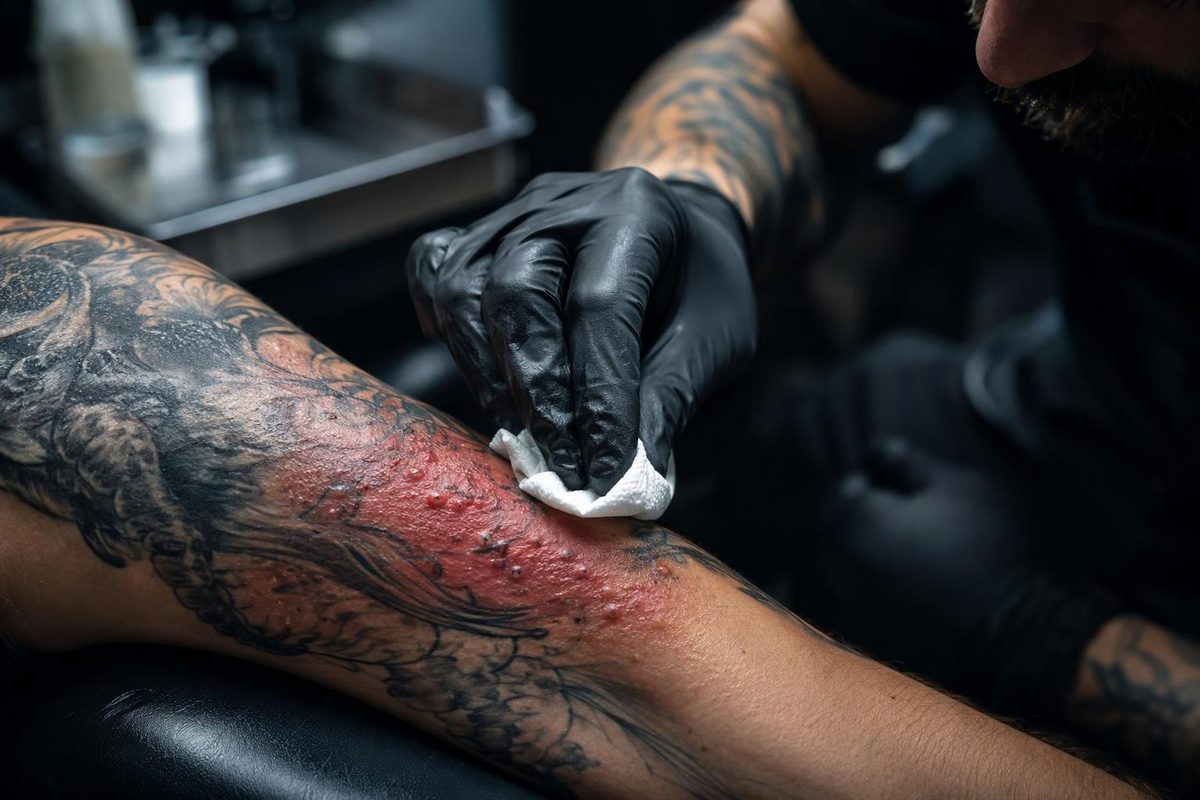
Yes, a tattoo can develop a staph infection, including MRSA. Staph bacteria commonly live harmlessly on skin or in the nose, but can cause infection when they enter broken skin. MRSA—methicillin-resistant Staphylococcus aureus—is a type of staph resistant to several antibiotics, not a separate kind of tattoo reaction. You cannot identify it from a photograph or the color of the discharge. CDC’s MRSA guidance explains how it is recognized and diagnosed.
If you suspect infection, seek care today
Arrange same-day medical assessment if your tattoo develops pus, painful bumps, spreading redness, or pain that worsens rather than settles—especially with fever or chills. Some early soreness, redness, clear fluid, itching and flaking can be normal; new infection signs or worsening symptoms need attention. The American Academy of Dermatology recommends seeing a doctor right away for tattoo infection signs. Redness may be harder to see on brown or black skin, so also notice warmth, swelling and pain. NHS staph guidance
Seek emergency care if a suspected infection comes with confusion, shortness of breath or extreme pain or discomfort. These can be signs of sepsis, a medical emergency. CDC sepsis guidance
How does staph get into a tattoo?
Tattooing breaks the skin, giving bacteria a possible entry point. Staph may already be on your own skin; it can also spread through contact with another person, an infected wound or contaminated items. An infection alone does not establish who introduced the bacteria or prove that you did something wrong. NHS and CDC describe these routes.
Tattoo-associated MRSA is documented, not just theoretical. A CDC investigation of outbreaks in Ohio, Kentucky and Vermont during 2004–2005 found 34 infected tattoo recipients and 10 close contacts with secondary infections. The tattoos were done by unlicensed tattooists; nonsterile equipment and poor infection-control practices were identified as potential causes. This historical outbreak report is not an estimate of your risk at a modern studio. CDC outbreak investigation
Why confirming MRSA matters
Staph skin infections can appear as a painful, warm, swollen bump, a pus-filled abscess or a broader infected area. Those appearances cannot distinguish MRSA from other infections. A clinician must send a specimen to a laboratory to determine whether MRSA is the cause. CDC
The distinction matters for treatment: some antibiotics will not work against MRSA, but effective options remain available. An abscess may also need professional drainage, rather than antibiotics alone. Do not squeeze, puncture or attempt to drain it yourself. CDC treatment guidance
At the appointment, mention any previous MRSA diagnosis and explain when the tattoo was done and when symptoms started. For the broader treatment decisions, see what determines antibiotic treatment for a tattoo infection.
Can you pass it to someone else?
Yes. MRSA can spread through infected wounds and contaminated items; pus can contain the bacteria. While arranging care:
- Wash your hands before and after touching the area or changing a dressing.
- Keep the draining area covered with a clean, dry bandage.
- Do not pick or pop bumps.
- Do not share towels, washcloths or razors, and avoid direct contact between the wound and another person’s skin.
These steps follow CDC’s MRSA prevention guidance; they help limit spread but do not replace treatment. Once assessed, follow the clinician’s dressing instructions and take any prescribed antibiotics exactly as directed. For practical cleaning guidance, see tattoo infection care.