
8 min read ·
Care for a Possibly Infected Tattoo Without Delaying Treatment
Learn how to clean and protect a possibly infected tattoo, recognize urgent symptoms, prepare for medical assessment, and follow prescribed treatment safely.
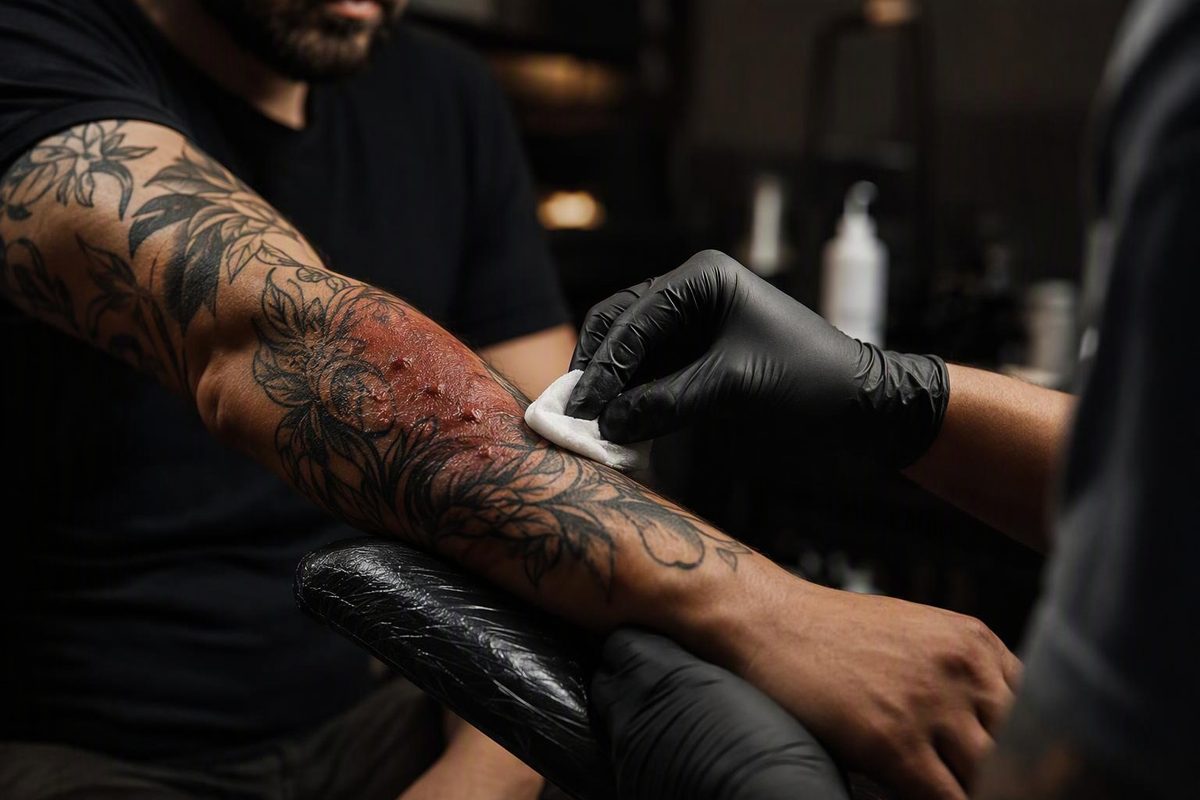
Tattoo infection care starts with medical assessment: seek care today if redness is spreading, pain is increasing, or you have pus, fever or chills. Gentle washing can protect the skin, but it does not treat an infection. You do not need every warning sign—or a fever—to seek help. The American Academy of Dermatology recommends seeing a doctor right away when tattoo infection signs appear. AAD guidance
Get emergency help now if suspected infection comes with confusion, fainting, fast breathing, a racing heartbeat, cold clammy skin or a very high temperature. Trouble breathing or chest tightness with a tattoo reaction also needs immediate help. Do not wait to wash the tattoo, contact the artist or see whether a cream helps. NHS cellulitis guidance · AAD reaction guidance
Choose the symptoms you have; the tool shows which care step comes first.
Choose the Next Care Step
With suspected infection: confusion, fainting, fast breathing, racing heartbeat, cold clammy skin or a very high temperature. With a tattoo reaction: trouble breathing or chest tightness.
Urgency Not Yet Determined
Select both answers to get a next step. If an emergency symptom is present, get emergency help now. Spreading redness, increasing pain, pus, fever or chills need medical care today.
This tool does not diagnose infection or rule it out. Follow your clinician’s instructions if you already have a treatment plan.
Sources: American Academy of Dermatology tattoo reaction guidance; NHS cellulitis guidance; MyHealth Alberta infected-tattoo care instructions. No symptom count is needed to seek care.
Medical Assessment Comes Before Home Treatment
If you are unsure whether the changes are expected, compare tattoo infection signs with normal healing. That comparison can help you describe what is happening, but it cannot establish a diagnosis. Increasing pain or spreading redness should not be dismissed just because the tattoo is new.
The care routine below is for protecting the skin while you arrange assessment and while you follow prescribed treatment. It is not a way to cure an infection at home. A tattoo can need medical treatment even when you have been washing it carefully and following your artist’s aftercare instructions.
When you call for care, lead with the changes that prompted the call: spreading redness, increasing pain, pus, fever or chills. Say whether you already have a treatment plan and whether symptoms are worsening despite it. You do not need to decide which organism or skin condition is responsible before asking for an assessment.
If a clinician has already given you wound-care instructions, follow those rather than replacing them with the general routine here. Keep the instructions for medicines, washing and dressings together so you are not mixing parts of several different aftercare plans.
Wash Uncovered Skin Gently, Not More Aggressively
Wash your hands before touching the tattoo or handling its dressing. The AAD includes hand hygiene in its guidance on caring for injured skin and preventing infection. Prepare the washing and dressing supplies before you start so you do not have to interrupt care to search for them. AAD hand-hygiene guidance
For an uncovered tattoo, MyHealth Alberta’s infected-tattoo care instructions recommend gently washing with mild soap and water twice daily and patting it dry. Do not scrub. The same instructions advise against alcohol and hydrogen peroxide because they can slow healing. MyHealth Alberta care instructions
The aim is gentle cleaning, not repeatedly disinfecting the area until it looks less inflamed. Redness that remains after washing is not a reason to scrub harder, add peroxide or keep repeating the wash. If redness is spreading or pain is increasing, the next step is medical assessment—not a stronger cleanser.
Twice-daily washing is the general routine in those infected-tattoo instructions, not a replacement for a clinician’s individual wound-care plan. If the treating clinician gives you a different schedule or method, use that plan. If the instructions are unclear, ask specifically how often to wash and what to use.
This routine applies once the skin is uncovered. If adhesive “second skin” is still attached, ask the clinician how to handle that dressing. Do not assume that instructions for washing uncovered skin also tell you whether to leave an adhesive film in place, remove it or replace it.
Protect the Tattoo Without Rubbing or Soaking
MyHealth Alberta’s infected-tattoo instructions allow a thin layer of unscented, water-based cream or lotion and a non-stick bandage, replaced as needed. That is a skin-protection option, not an infection treatment. Use any specific dressing instructions from your clinician instead if they differ from this general advice.
“Thin layer” does not mean repeatedly adding product whenever the tattoo looks red. Keep washing, moisturizing and dressing decisions separate from the question of whether the infection needs treatment. A product that makes the skin feel more comfortable does not establish that the underlying problem is improving.
For the appointment, bring the names or packaging of the lotion and dressing you are using. If a clinician recommends a change, clarify whether it applies to the cleanser, moisturizer, covering or all three. That avoids continuing one product while assuming the entire old routine has been approved.
Stay out of baths, pools and hot tubs until the tattoo is fully healed. Wear loose clothing and leave scabs alone; picking and tight clothing are not part of wound care. Cleveland Clinic includes these restrictions in its tattoo aftercare guidance. Cleveland Clinic aftercare
Gentle washing and soaking are different activities. A brief wash does not make a bath or swim appropriate while the tattoo is healing. Likewise, covering the tattoo does not change the advice to avoid soaking it. Keep the protection plan focused on the dressing and clothing your clinician recommends, rather than using a covering as permission to swim.
Do Not Choose an Antibiotic Ointment as Your Treatment Plan
An over-the-counter antibiotic ointment is not a substitute for an assessment of a suspected tattoo infection. The AAD warns that these products can cause contact dermatitis—an itchy or painful rash. Adding one on your own may introduce another skin reaction while you are trying to understand the original problem. AAD antibiotic guidance
If your clinician prescribes an antibiotic ointment, use it as directed. The distinction is between following a prescribed treatment and choosing a product yourself because its label says “antibiotic.” A warning about unnecessary over-the-counter ointment does not mean you should stop a prescribed one without discussing it with the treating clinician.
Tell the clinician about any ointment you have already applied, including its name and when you started using it. Include products you stopped using, not only the ones currently on the tattoo. If itching or a new rash appeared after a product change, describe that sequence rather than assuming it proves either an allergy or an infection.
Do not keep adding or switching products while waiting for redness to settle. Your appointment record should make clear which symptoms started first and which products were introduced afterward. That history is more useful than arriving with a list of products but no account of when each was used.
Bring a Symptom Timeline and Product Details
Write down when you were tattooed, when symptoms began and how they have changed. Include whether redness has spread, pain has increased or drainage has appeared. Dated photos can help show the progression, particularly if the appearance changes between the first concern and the appointment.
Bring your medication and allergy list, along with the names or packaging of cleansers, lotions and dressings. If you are already taking prescribed treatment for this tattoo, include when you started it and the instructions you were given. Keep the actual prescription directions available rather than relying on memory.
Your artist can help supply information, but should not become a waiting step before medical care. Let the shop know what is happening and ask for ink details that may be useful to your healthcare provider. Send the message while arranging assessment, not instead of arranging it.
A clinician may diagnose a tattoo infection by examination or arrange testing to identify the bacteria. Antibiotics are a common treatment, but the choice and duration depend on the diagnosis and severity. Ink information from the shop may help the healthcare provider assess the problem. Cleveland Clinic tattoo infection guidance
The draft guidance does not provide one antibiotic, dose or treatment duration suitable for every tattoo infection. Do not borrow another person’s prescription or use an aftercare product list to choose treatment. For the factors involved, see what determines antibiotic treatment for a tattoo infection.
Follow the Prescribed Plan and Its Review Point
Take prescribed medicines exactly as directed and attend follow-up appointments. Keep the wound-care instructions alongside the medicine directions: treating the infection and protecting the skin are connected tasks, but washing cannot replace medication when medication has been prescribed.
Before leaving the appointment, make sure you understand what to use on the tattoo, how to manage the dressing and when to contact the clinician again. If the plan gives you a review date, record it. If the clinician changes treatment after testing or reassessment, use the revised instructions rather than combining the old and new plans yourself.
If you are being treated for cellulitis and are not starting to feel better within two to three days of starting antibiotics, contact the treating clinician. This NHS timeframe applies to cellulitis; it is not a universal waiting period for every possible tattoo infection. Contact the clinician sooner if symptoms worsen. NHS treatment guidance
Do not interpret that review window as permission to wait through worsening symptoms. It describes when to report a lack of improvement during cellulitis treatment, not when you should first seek care for an untreated tattoo. Emergency symptoms still require immediate help, even if a follow-up appointment is already booked.
Keep your symptom record during treatment. Note when medicines started, whether the concerning changes are continuing and any new symptoms you need to report. Photos can support that account, but they should not delay a call when the tattoo is getting worse.
New Circulation Symptoms or Heavy Bleeding Need Immediate Advice
New numbness or tingling, pale or cool skin near the tattoo, or bleeding that soaks through a bandage needs immediate medical advice under MyHealth Alberta’s infected-tattoo instructions. These are separate reasons to contact a healthcare professional; do not wait for pus or fever to appear as well. MyHealth Alberta warning signs
If confusion, fainting, fast breathing, a racing heartbeat, cold clammy skin or a very high temperature develops with suspected infection, get emergency help. Trouble breathing or chest tightness with a tattoo reaction also belongs on that emergency pathway, not in a routine aftercare message to the shop.
For a possibly infected tattoo, the sequence stays the same: arrange the appropriate medical care, clean and protect the skin gently, then follow the prescribed treatment and reassessment plan. Neither a freshly washed tattoo nor a new bandage is evidence that an infection has been treated.