
3 min read ·
Allergic Reaction to Tattoo Dye: What to Do Next
Tattoo ink allergies can appear years later. Learn what causes them, why patch tests may miss them, and how dermatologists assess and treat reactions.
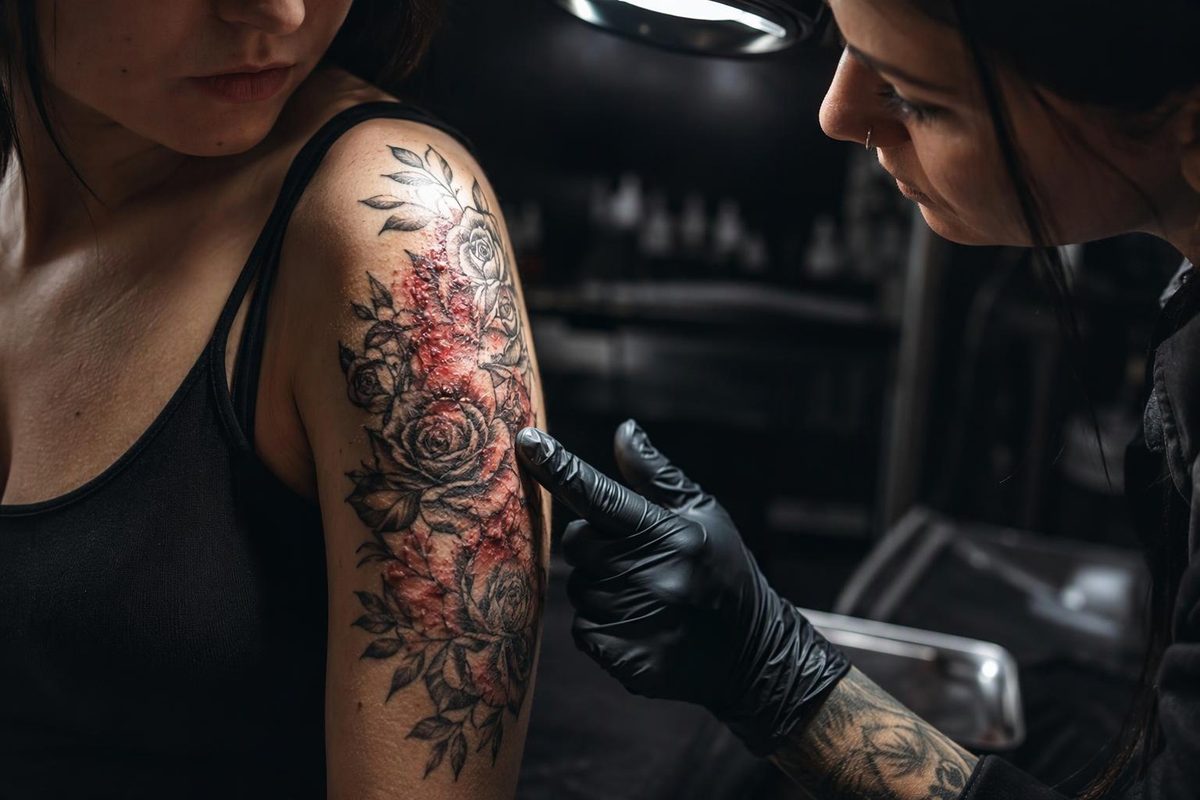
An allergic reaction to tattoo dye can cause a persistent itchy rash, raised patches or lumps—often within just one ink color. It can begin immediately, weeks later or even decades after the tattoo was done. Red ink is a frequent culprit, but any color can cause a reaction. American Academy of Dermatology (AAD)
Get emergency help now if a tattoo reaction comes with trouble breathing, chest tightness, dizziness, a racing heart, hives, intense swelling or severe pain. Seek same-day medical care for spreading redness, worsening pain, pus, fever or chills: these may indicate infection rather than allergy. AAD guidance
For a mild, localized reaction without symptoms elsewhere in your body, arrange dermatology assessment if it lasts longer than one or two weeks; seek help sooner if it worsens. Notify the artist to obtain ink information, but use a clinician for diagnosis and treatment. AAD guidance
What suggests an ink allergy?
A reaction that follows one color throughout the design is a useful clue. Possible changes include:
- Persistent itching with redness or swelling.
- Small bumps or raised, scaly patches.
- Deep lumps.
- Blisters, crusting or watery leakage.
These are recognized signs of ink allergy, but appearance alone cannot confirm the diagnosis. Mild itching and flaking can also occur during normal healing, while infections and other inflammatory skin conditions can resemble an allergic reaction. AAD guidance Clinical review
For a broader comparison, see our guide to signs of infection from a tattoo.
What causes the reaction?
Permanent tattoo ink places pigments and additives in the deeper skin. Many tattoo allergies are thought to involve a delayed immune response. The trigger may be a pigment, another ink ingredient or a substance formed as pigment breaks down in the skin; often, the exact allergen remains unidentified. Sunlight can trigger some reactions. Because the material remains in the skin, inflammation may persist or recur. Review of tattoo-related skin reactions
Not every post-tattoo rash is caused by the dye. Fragrance and other ingredients in aftercare products can also cause contact allergy. Tell the clinician about everything used on the area, not just the ink. Tattoo-reaction review
How a dermatologist checks it
Assessment starts with the timing, affected colors, symptoms, product exposures and a skin examination. Persistent lumps or an unclear rash may require a skin biopsy—a small tissue sample—to help distinguish allergy from foreign-body inflammation, infection or another skin condition. Diagnostic approaches
Prepare for the appointment by gathering:
- The tattoo date and when symptoms first appeared.
- Photos showing how the reaction has changed.
- Ink brands, color names and batch details, if the artist can supply them.
- Names or ingredient lists for cleansers, moisturizers, dressings and other products used.
- Previous allergy-test results and any medicines already tried.
A negative patch test does not rule it out
Patch testing places suspected allergens on the skin surface. It can help investigate contact allergies, but it cannot reliably diagnose tattoo-pigment allergy. Pigments may penetrate poorly during testing, suitable test materials may be unavailable, and the relevant allergen may form slowly within the tattooed skin. A positive result also needs clinical interpretation: it does not necessarily identify the cause of the tattoo reaction. Review of patch-tested tattoo patients
Do not treat a negative test as proof that another tattoo or ink is safe.
How treatment works
Depending on the diagnosis and severity, a dermatologist may prescribe a corticosteroid cream or ointment, inject corticosteroid into raised lesions, or consider other treatment. Antihistamines may be used for symptoms. Some reactions settle, while others persist or fluctuate; there is no dependable home-treatment timeline. Ask a clinician before using steroid treatment on an undiagnosed tattoo rash. Treatment review
Do not book routine laser removal as a quick fix. Pigment-fragmenting Q-switched lasers can trigger or worsen allergic reactions. Resistant cases may need specialist discussion of removal options, including surgery, with the possibility of scarring or permanent skin changes. Treatment considerations Surgical case series
Before another tattoo or touch-up, discuss the reaction with your dermatologist. Avoid the implicated color even if a different brand is offered; other colors cannot be guaranteed safe because inks may share ingredients. Tattoo-allergy guidance