
4 min read ·
Tattoo Touch-Up: Wait for Healed Skin, Then Assess the Ink
Learn when to arrange a tattoo touch-up, which healed gaps to show your artist, what to ask about costs, and how to care for the refreshed area.
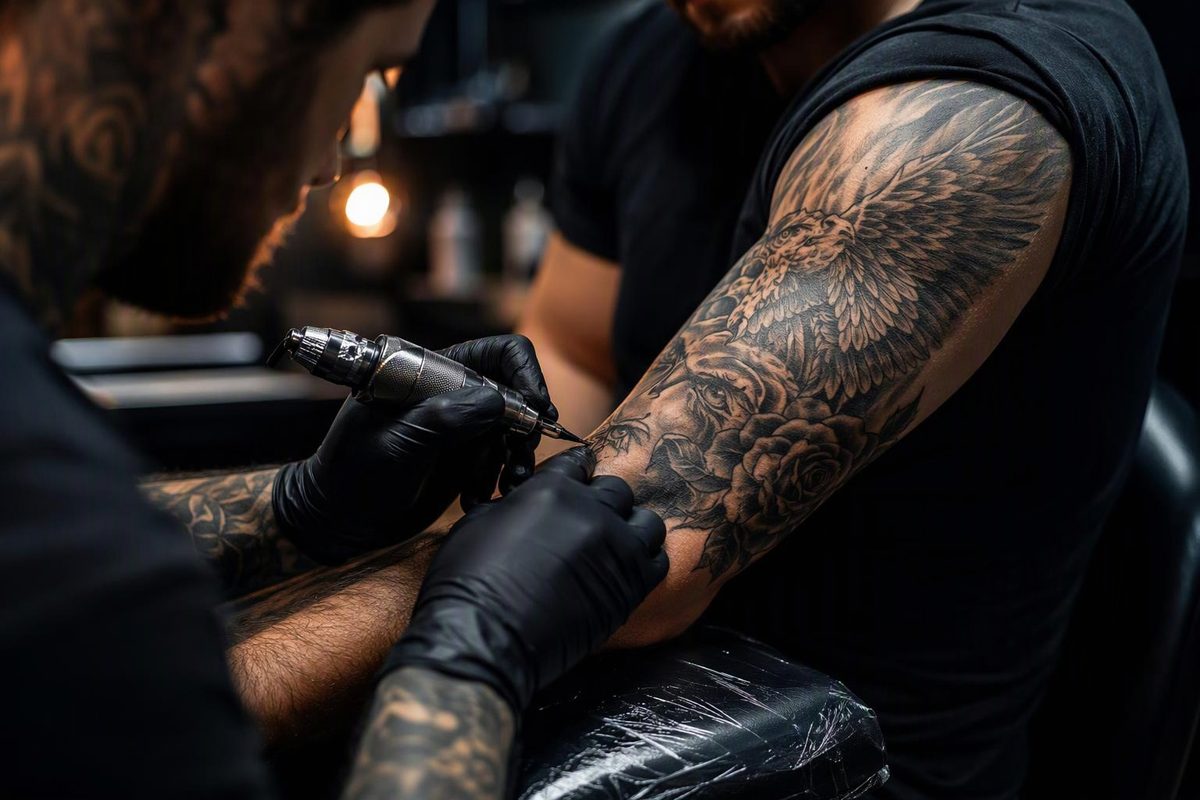
A tattoo touch-up adds ink to selected areas of an existing tattoo, usually to refine missing linework or uneven shading after healing. Wait until the skin has healed before having it tattooed again. A review around six to eight weeks can be a useful planning point, but it is not automatic clearance: your artist needs to assess the skin as well as the ink.
You can contact the studio earlier to ask about its policy. Asking for advice is different from being ready for another session.
When is a tattoo ready for a touch-up?
Studio timelines differ. Vism Studio says touch-ups can be scheduled approximately 1.5 months after the original session; Aloha Tattoo asks clients to allow four to eight weeks of healing before evaluation. These are studio practices, not universal medical deadlines.
Healing also continues below the surface. Cleveland Clinic’s dermatologist-led guidance notes that the top layer is typically healed by about two months, while deeper layers can take several more months. Size, location and individual healing affect the timeline.
Before agreeing to a session, check that:
- Peeling and scabs have finished, without being picked off.
- There are no open, cracked or weeping areas.
- Redness, swelling and tenderness have settled.
- There is no persistent rash or unexplained raised area.
These checks help you decide whether to request an assessment; they do not replace the artist’s evaluation. If healing has been difficult, explain what happened rather than relying only on the date. Our tattoo healing timeline explains why surface appearance and deeper recovery are different.
Does it actually need more ink?
A fresh tattoo is not the right comparison for the finished result. Flaking and scabbing can occur during normal healing, so avoid deciding that a patch needs repair while it is still covered by healing skin. Let flakes fall away naturally; do not scrub or pick to inspect the color underneath. Cleveland Clinic advises against picking or scratching healing tattoos.
Once healed, useful things to show your artist include:
- A clear break in a line.
- A small area where color is absent.
- Uneven shading or saturation that remains after peeling ends.
ShowOff Ink Artistry’s touch-up guidance identifies missing color and lines as reasons for assessment. A touch-up is not automatically necessary just because you can see a difference from the day-of-session photo.
If you want a different shape, extra detail or a substantial redesign, describe that explicitly. It may be reworking rather than a small touch-up; Aloha Tattoo distinguishes minor adjustments from extensive rework and design additions.
What to send your artist—and ask about cost
Start with the original artist if possible. Send the tattoo date, one clear photo of the whole tattoo and close-ups of the areas that concern you. Aloha Tattoo’s photo requirements call for bright, indirect daylight, sharp focus, multiple angles and both full-tattoo and close-up views. Avoid filters so the artist can assess the appearance without altered color or texture.
Ask:
- Does this need a touch-up, or more healing time?
- Is the work covered by the original price?
- Is there a deadline to request or complete it?
- Are there placement exclusions, a session fee or a deposit?
Free touch-ups are a studio policy, not a guarantee. As checked on October 26, 2026, Vism Studio offers artist-approved complimentary touch-ups within the first six months. Aloha Tattoo lists complimentary linework touch-ups within eight weeks, with exclusions. Confirm your own studio’s terms before booking, and ask how it handles a deadline if your skin needs longer to heal.
Aftercare starts again on the touched-up area
Even a small adjustment involves needles entering the skin again. Follow the artist’s dressing instructions, wash gently, moisturize as directed and avoid picking, tight clothing, soaking and direct sun while it heals. Do not assume a short session means you can skip aftercare or swim immediately afterward. These precautions follow Cleveland Clinic’s tattoo aftercare guidance; our daily aftercare routine puts them into a practical sequence.
Once healed, use broad-spectrum, water-resistant SPF 30 or higher on exposed tattooed skin. The American Academy of Dermatology notes that UV light can fade some inks.
When to seek medical care instead
Do not treat an inflamed or changing tattoo as simply missing ink. Get medical care promptly for spreading or darkening redness, worsening pain, pus, open sores, fever or chills. The American Academy of Dermatology recommends seeing a doctor right away for possible infection signs.
A persistent itchy, raised or blistering patch—especially within one ink color—also needs assessment before more ink is added. Seek immediate medical care if a reaction includes trouble breathing or chest tightness. These are among the AAD’s warning signs of an ink reaction. Resolve the skin problem first; cosmetic repair can wait.