
3 min read ·
Tattoo healing on day 4: check the trend, then the dressing
What a tattoo may look and feel like on day four, how to handle washing, moisturizer and second skin, and which changes need medical attention.
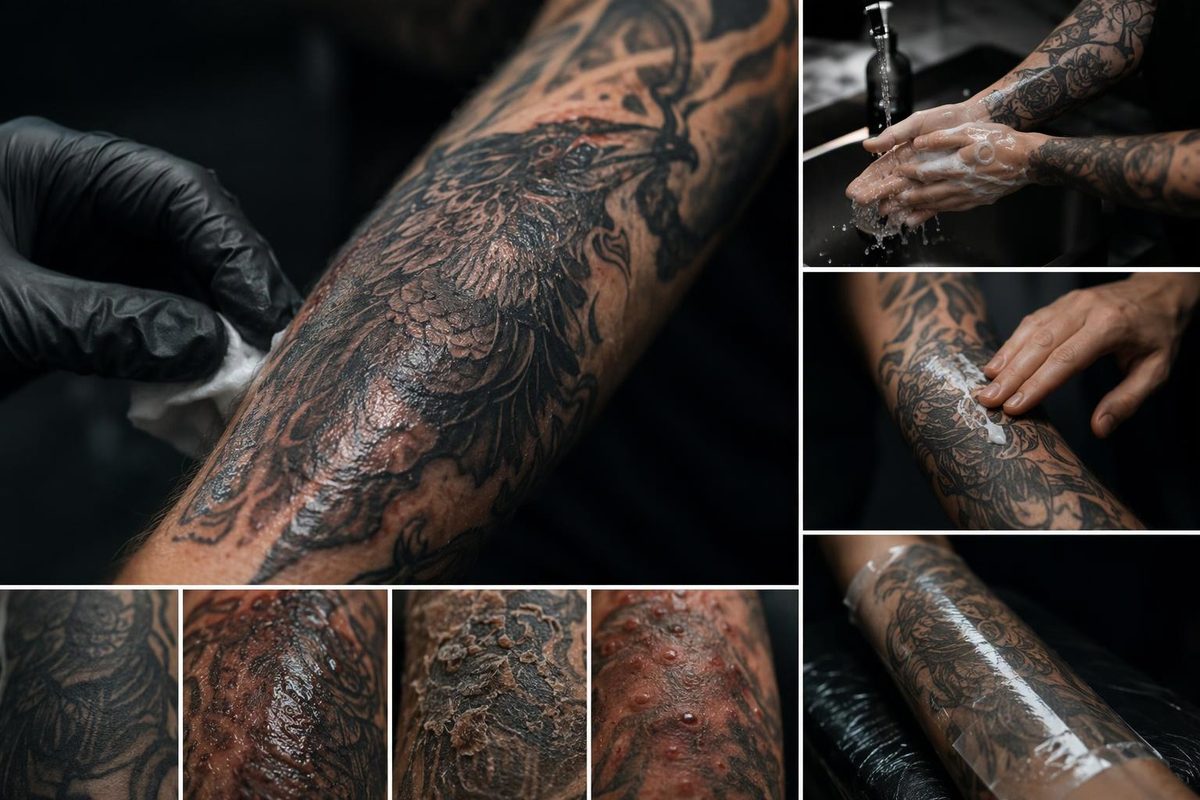
On day four, a tattoo may look duller than it did fresh, with light scabbing and the beginnings of dryness or itching. Redness should generally be starting to fade, not spreading, and soreness should be easing rather than increasing. Healthline’s days 4–6 guidance describes fading redness and light, sometimes raised scabs; the American Academy of Dermatology emphasizes that pain should subside rather than worsen.
Today’s main decisions are whether those symptoms are improving and whether your dressing is due for removal—not whether the tattoo has reached a particular amount of peeling.
What can be normal today?
You may notice:
- A dull or cloudy appearance compared with the first day.
- Light scabs or a slightly raised surface.
- Mild itching, dryness or early flakes.
- Some remaining tenderness or redness that is diminishing.
These changes do not all have to happen together. Healing speed varies with the tattoo’s size and complexity, and day four is not a deadline for peeling to begin. Healthline places more established flaking later in its timeline; the American Academy of Dermatology also identifies itching, flaking and scab formation as possible parts of normal healing.
Your day-four care plan
If adhesive “second skin” is still on
Check the instructions for your specific dressing and the removal plan your artist gave you. Day four alone is not a reason to remove every adhesive film.
For example, Saniderm’s instructions say to change the initial film within 24 hours; a second piece may remain for up to six days, with no more than seven days’ total wear. These are maximum wear times: weakening adhesion is a reason to remove or replace it sooner, and fluid weeping into a second piece changes the removal schedule. Those directions apply to Saniderm, not every brand or ordinary cling film.
If you do not know which covering you have or when it should come off, contact your artist today rather than guessing. When removal is due, wash your hands and follow the product’s removal directions before beginning uncovered aftercare.
If the tattoo is uncovered
Keep today’s routine gentle:
- Wash once or twice. Wash your hands first, then use warm water and mild, fragrance-free soap on the tattoo. Do not scrub off flakes or scabs. Pat dry with a clean paper towel.
- Moisturize lightly. Once the skin is dry, apply a small amount of a simple, fragrance-free moisturizer or the aftercare product recommended for your tattoo. Do not switch products solely because it is day four; use your artist’s plan and the skin’s condition to guide you.
- Leave loose skin alone. Do not scratch, pick or exfoliate—even if a flake looks ready to come away.
- Reduce rubbing and exposure. Wear loose clothing. Keep the tattoo out of direct sun and avoid baths, pools and hot tubs while it heals. Washing is different from soaking.
These steps follow Cleveland Clinic’s first-week aftercare recommendations and Healthline’s day-by-day guidance. For help choosing a moisturizer, see how a tattoo lotion fits the healing stage.
When day-four changes need medical care
Seek medical care today if redness is expanding or darkening, pain is worsening, the skin feels hot, or you notice pus, foul odor, significant drainage, red streaks, fever or chills. Do not wait for a later healing milestone or rely only on an artist’s assessment. Both the American Academy of Dermatology and Cleveland Clinic identify these worsening changes as reasons for prompt medical attention.
Mild itch or light scabbing alone is different from worsening pain and spreading redness. If you are unsure which pattern you are seeing, use the tattoo infection warning-sign guide while arranging professional advice.