
4 min read ·
Tattoo Aftercare Gel: Check the Formula, Not Just the Texture
Compare tattoo aftercare gel with lotion and ointment, check ingredients and product directions, and learn how to apply it without overdoing moisture.
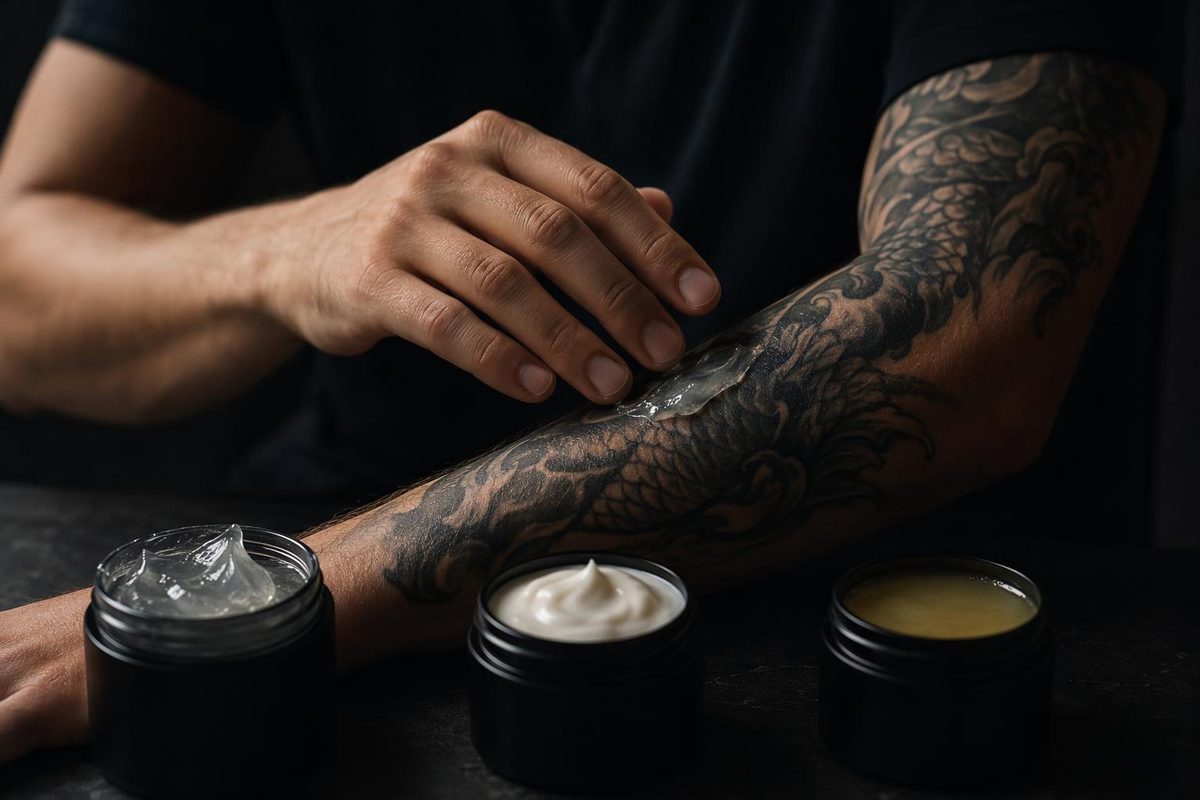
A tattoo aftercare gel can be a moisturizing option if you prefer a lightweight finish. Choose it by its ingredients, fresh-tattoo directions and fit with your artist’s dressing plan—not simply because it feels cooling or carries a tattoo label. A gel is an option, not an extra step you must add to lotion or ointment.
What makes gel different from lotion or ointment?
“Gel” describes a formulation, not a guarantee of gentleness. Gels can be water-based or alcohol-based and may contain fragrance and preservatives. Manufacturers also use the terms gel, lotion and cream inconsistently, so the name alone tells you little about suitability for healing skin. DermNet explains these formulation differences.
The practical comparison is:
- Gel: Can offer a light finish. Check whether it is a leave-on moisturizer, rather than a cleanser or another type of product.
- Lotion: Usually contains water plus some oil and is another option for light moisturizing.
- Ointment: Usually contains little water and leaves a greasier, more occlusive layer that reduces moisture loss.
- Balm: Another label without a distinct definition in DermNet’s formulation table; judge the actual formula rather than assuming it behaves differently from ointment.
These are broad texture differences, not a ranking of tattoo-healing performance. Gels are not necessarily oil-free: the ingredient lists for both tattoo gels discussed below include plant oils. Moisturizing performance depends on the formula: humectants attract water, while occlusive ingredients reduce water loss. DermNet’s moisturizer guidance explains these roles.
What to check before buying
For a lightweight option, look for a water-based, fragrance-free leave-on moisturizer, with directions that clearly cover new tattoos. Glycerin is one recognizable moisturizing ingredient; its role is to attract and retain water in the outer skin layer. Fragrance and other ingredients can cause contact allergy in susceptible people, so avoid anything you already know you react to. DermNet details moisturizer ingredients and reactions.
Do not substitute an exfoliating facial gel for tattoo aftercare. Cleveland Clinic advises avoiding exfoliation while a tattoo heals. Treat claims such as “brighter ink,” “repair” or “clean ingredients” as marketing descriptions—not reasons to disregard your skin’s response or the application directions. Cleveland Clinic’s tattoo guidance recommends a simple moisturizer or recommended ointment.
Two label examples—not a product ranking
Product pages checked on November 12, 2026 illustrate why the exact label matters:
- Tattoo Goo Recovery Gel: The manufacturer calls it fragrance-free. Its ingredient list includes water, glycerin, panthenol, allantoin, sweet almond oil and argan oil. Directions specify a thin layer on clean, dry skin two to four times daily or as needed. Product ingredients and directions.
- Mad Rabbit Soothing Gel: Its page contains two different ingredient lists and different minimum application frequencies: at least twice daily in one section and at least once daily in another. One list includes retinol and sweet almond oil; the other does not. Both application sections call for a generous amount, unlike Tattoo Goo’s thin-layer instruction. Check your tube and ask the manufacturer to clarify any conflicting information before using it on a fresh tattoo. Product page.
Neither example establishes that gel heals a tattoo faster than lotion. If you already have a suitable moisturizer that agrees with your skin, a gel purchase is not necessary. For the alternative format, see choosing a tattoo aftercare lotion.
How to use gel without adding unnecessary layers
Follow the dressing plan first. Do not remove an intact dressing just to apply gel. Saniderm’s instructions place routine washing and moisturizing after the final bandage is removed; its covered-healing method eliminates repeated topical application while the bandage is in place. Saniderm’s care instructions.
Once your tattoo is uncovered and you are following a moisturizing routine:
- Wash your hands, gently wash the tattoo and pat it dry with a clean paper towel.
- Apply the amount directed for your exact product, spreading it gently without scrubbing or pulling at flakes. For Tattoo Goo Recovery Gel, that means a thin layer.
- Follow that product’s application schedule rather than borrowing another gel’s schedule. If its directions conflict with your artist’s plan, clarify the difference before proceeding.
Gentle washing and moisturizing are part of Cleveland Clinic’s recommended routine; thin-layer application is specified by Tattoo Goo. A lightweight texture is not a reason to keep adding product. If it leaves your skin uncomfortable or inadequately moisturized, reassess the formula with your artist rather than automatically layering ointment over it.
When to stop experimenting
Stop using a product that causes a new rash and seek clinical advice if it persists or worsens; moisturizers can cause contact dermatitis. DermNet advises discontinuing the culprit product.
Spreading redness, worsening pain, pus, fever or chills need prompt medical assessment—not a different gel. The American Academy of Dermatology recommends seeing a doctor right away for signs of tattoo infection.