
3 min read ·
Which Tattoo Ointment Should You Choose?
Compare CeraVe, Aquaphor and fragrance-free Hustle Butter by ingredients, petroleum content and allergy considerations—not claims of faster healing.
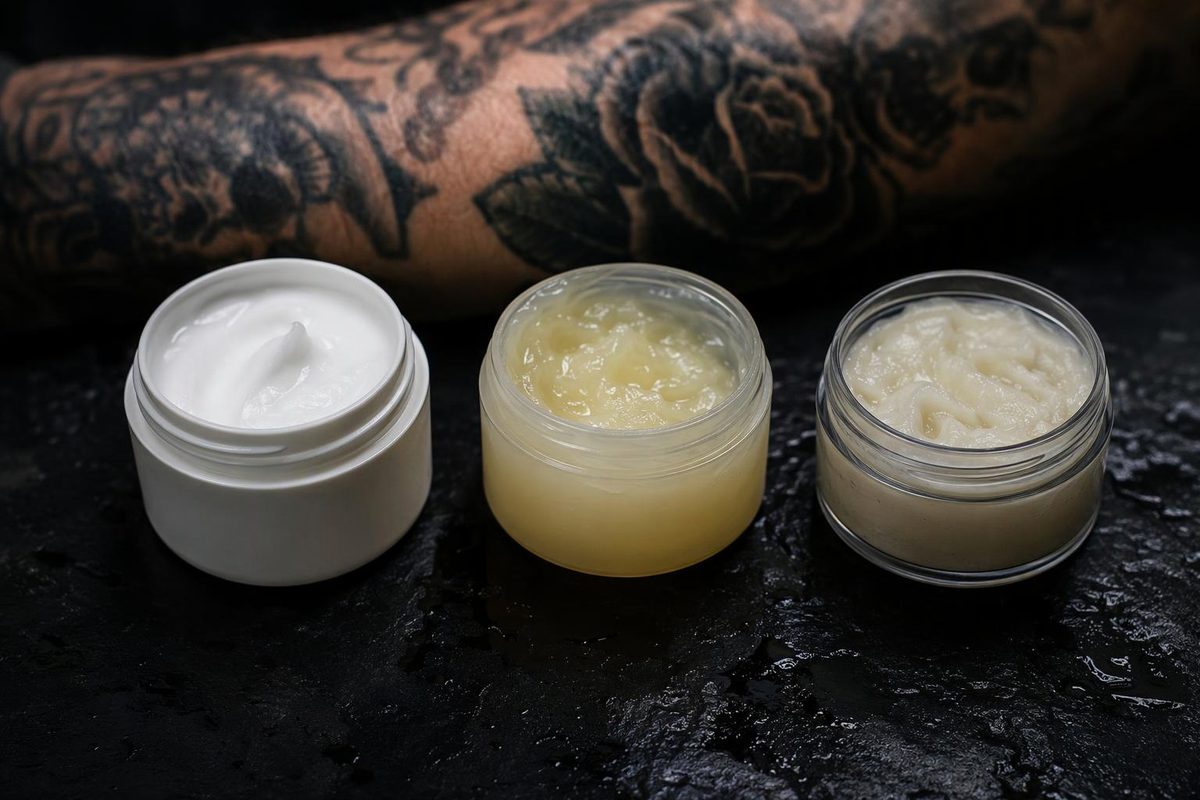
If your tattoo aftercare plan calls for an ointment, choose by ingredients—not by promises of faster healing. CeraVe Healing Ointment offers a lanolin-free petroleum-based option; Aquaphor Healing Ointment can fit an artist-directed plan if you tolerate its ingredients; Hustle Butter Fragrance-Free Tattoo Balm is an option when you want to avoid petroleum.
These are formula-based recommendations, not a ranking of healing speed. An ointment is not compulsory: Cleveland Clinic’s tattoo guidance allows a simple moisturizer or recommended ointment. Follow your specific dressing instructions before starting either.
First, check whether your plan allows petroleum
Advice differs here. Cleveland Clinic advises avoiding petroleum jelly on healing tattoos, while the American Academy of Dermatology recommends it for keeping minor wounds moist. The latter is general wound guidance, not a tattoo-product endorsement.
Both CeraVe and Aquaphor below contain petrolatum. They are not petroleum-free alternatives simply because they contain additional ingredients. If your artist or clinician has told you to avoid petroleum-based products, exclude both and discuss a fragrance-free balm or simple moisturizer instead.
Three options and when each fits
CeraVe Healing Ointment: when avoiding lanolin matters
CeraVe’s formula contains 46.5% petrolatum, plus mineral oil, dimethicone, three ceramides and hydrolyzed hyaluronic acid. The manufacturer identifies it as fragrance-free and lanolin-free.
It is worth considering when your aftercare plan permits a petroleum-based ointment but you need to avoid lanolin. The extra ingredients distinguish it from Aquaphor, but they do not establish that it heals tattoos faster or preserves ink better.
Main limitation: it is still a thick, moisture-sealing ointment. Choose the product labeled Healing Ointment, not an unrelated CeraVe lotion or treatment, and use a thin layer.
Aquaphor Healing Ointment: when it is already in your artist’s plan
Aquaphor Healing Ointment contains 41% petrolatum and is fragrance-free. Its listed inactive ingredients are mineral oil, ceresin, lanolin alcohol, panthenol, glycerin and bisabolol.
It is a reasonable option to discuss when your artist specifically recommends it and you have no known allergy to its ingredients. If you already tolerate it and it fits your instructions, the comparison gives you no reason to buy a second ointment merely for added ceramides or tattoo branding.
Main limitation: it contains lanolin alcohol, unlike CeraVe. Avoid it if you have a known lanolin allergy; DermNet advises avoiding lanolin-containing products once lanolin has been identified as an allergen. Select the exact Healing Ointment formula rather than assuming Aquaphor sprays, sticks and lip products are interchangeable. Our Aquaphor healing guide covers its application and timing separately.
Hustle Butter Fragrance-Free Tattoo Balm: when avoiding petroleum matters
Hustle Butter’s fragrance-free balm is labeled petroleum-free and vegan. Its ingredient list includes shea butter, sunflower oil, hydrogenated coconut oil, mango seed butter, aloe, green tea and rosemary extracts. The manufacturer directs a small amount applied with clean hands during tattoo healing.
This is the most relevant option in this comparison if your plan calls for a petroleum-free balm. Choose the version explicitly labeled Fragrance-Free: the original Deluxe balm has the brand’s signature scent.
Main limitation: fragrance-free does not mean ingredient-free. Check the botanical ingredients against any known allergies; a plant-based formula is not automatically a better fit for reactive skin.
Formula details checked November 4, 2026, using the linked product pages; the CeraVe and Aquaphor references are for U.S. products. Read the package you buy, because formulations can change.
What not to substitute
Do not make an antibiotic ointment such as Neosporin your routine moisturizing choice unless a clinician directs it. The AAD’s minor-cut guidance advises against routine topical antibiotics and notes that they can irritate skin.
Whichever option fits, keep application simple: clean hands, gently washed and dried skin, and a thin layer. If a lighter product would meet your needs, use our tattoo lotion selection guide rather than adding another balm.
If redness spreads, pain increases, or you develop fever, red streaks or significant drainage, seek prompt medical assessment rather than trying a stronger ointment. These are warning signs identified by Cleveland Clinic.