
3 min read ·
Cephalexin for a Tattoo Infection: When It Can Help
Cephalexin can treat some bacterial tattoo infections, but not MRSA. Learn its limits, safe prescription use, and when to contact your clinician.
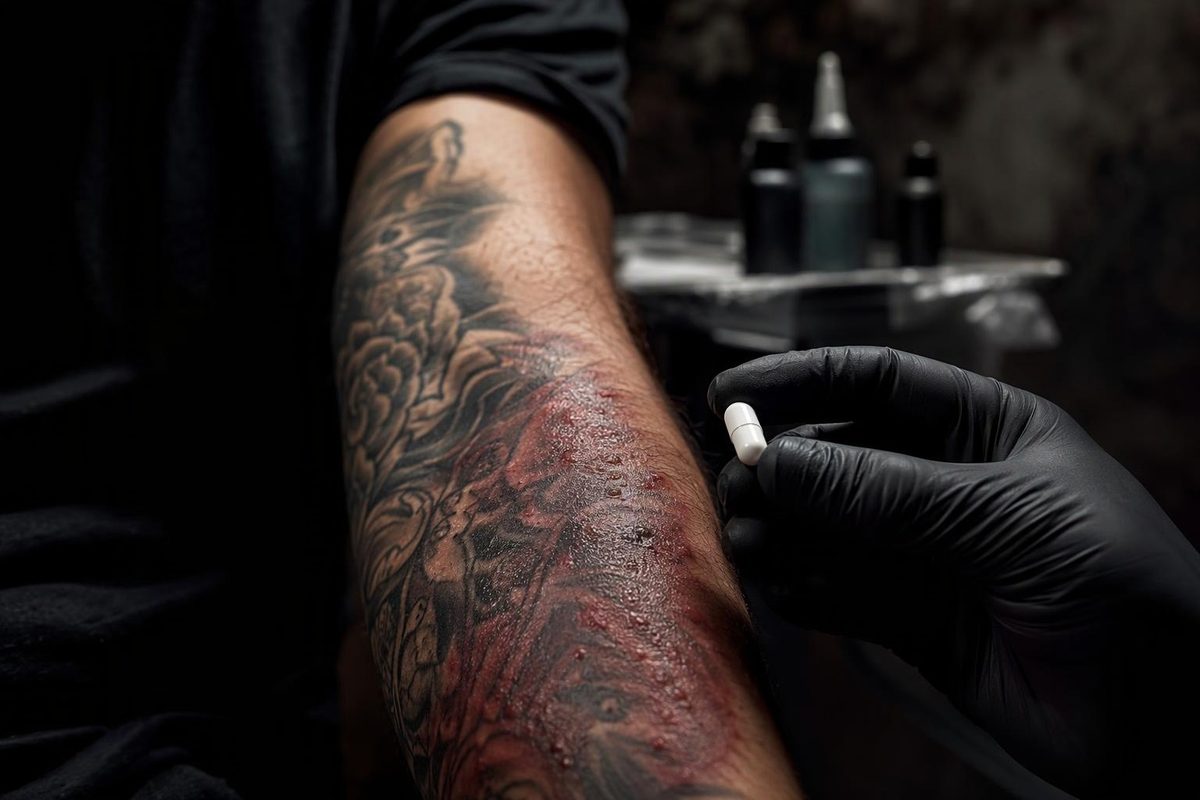
Cephalexin can treat some bacterial infections in tattooed skin, but it is not suitable for every tattoo infection. It covers susceptible streptococci and methicillin-susceptible Staphylococcus aureus (MSSA). It does not cover methicillin-resistant Staphylococcus aureus (MRSA). These distinctions are stated in the cephalexin prescribing information.
If your tattoo has spreading redness, worsening pain, pus, fever or chills, seek medical assessment promptly rather than starting leftover antibiotics. The American Academy of Dermatology recommends seeing a doctor right away for tattoo infection signs.
When a clinician may choose cephalexin
Cephalexin is an oral cephalosporin antibiotic. A clinician may prescribe it for cellulitis—a bacterial infection of the deeper skin—when the likely bacteria are susceptible to it. The 2014 IDSA skin-infection guideline lists cephalexin among oral options for typical cellulitis, especially when there is no abscess or purulent drainage.
That is not a tattoo-specific guarantee. The examination, severity, history of MRSA and circumstances of the infection determine whether cephalexin alone is appropriate. The guideline also flags penetrating trauma as a reason to consider MRSA coverage, so a tattoo-related infection needs individual assessment.
Its main limitations are:
- MRSA: Cephalexin will not treat it. Tell the clinician if you have previously had MRSA; suspected or confirmed MRSA can require different antibiotic coverage.
- An abscess: A pocket of pus may need drainage by a clinician, with antibiotics added when appropriate. Cephalexin alone is not a substitute for drainage.
Both distinctions are addressed in the IDSA guideline. Do not add or switch antibiotics yourself.
Redness does not always mean infection, either. Normal early healing and ink allergy can also cause skin changes; an itchy reaction confined to one ink color can suggest allergy. Cephalexin treats bacteria, not the allergic reaction itself. See our healing-versus-infection guide for a fuller comparison, based on dermatology guidance.
If you have been prescribed cephalexin
Follow your prescription’s dose, spacing and duration. A “500 mg” capsule describes its strength, not how often you should take it. Kidney function can change the dosing plan, so tell the prescriber about kidney disease and any previous reaction to cephalexin, other cephalosporins or penicillin. Bring your medication and supplement list for an interaction check. The prescribing information covers these precautions.
According to MedlinePlus:
- You can take cephalexin with or without food.
- Take it at consistent times and finish the prescribed course unless your clinician changes the plan.
- If you miss a dose, take it when remembered unless it is nearly time for the next one. Do not double up.
Nausea, stomach discomfort and diarrhea can occur. Get emergency help for trouble breathing or swelling of the face, lips, tongue or throat. Contact a clinician immediately about a new rash or hives, or watery or bloody diarrhea, especially with cramps or fever—even if the diarrhea starts after treatment ends. These are recognized cephalexin safety warnings.
When should the tattoo improve?
You should begin feeling better within the first few days. For cellulitis, contact your clinician if improvement has not started within 2–3 days of beginning antibiotics, as advised by the NHS. Do not wait until the prescription is finished to report a lack of improvement.
Contact the prescriber sooner if symptoms worsen or new pus or fever appears. They may need to reassess the diagnosis, look for an abscess or change treatment—not simply extend cephalexin.
Seek emergency care if the infection is accompanied by confusion, faintness, fast breathing or a fast heartbeat; the NHS identifies these as possible serious complications. For cleaning and protection alongside the medical plan, use our tattoo infection care guide.